“You prepare a table before me in the presence of my enemies. You anoint my head with oil; my cup overflows. Surely your goodness and love will follow me all the days of my life, and I will dwell in the house of the Lord forever.”
Reflecting on these verses, we can find profound spiritual truths:
God’s Provision: The image of God preparing a table before us in the presence of our enemies signifies His abundant provision and protection. Even in the midst of challenges and adversities, God ensures that we are nourished and sustained.
Divine Blessings: The anointing with oil symbolizes God’s favor and empowerment upon our lives. It represents consecration and blessing, where God pours out His Spirit upon us, filling us to overflowing with His goodness.
Unfailing Love: The assurance that goodness and love will follow us all the days of our lives reminds us of God’s faithfulness and constant presence. His love is steadfast and enduring, accompanying us through every season and circumstance.
Eternal Security: The psalm concludes with the promise of dwelling in the house of the Lord forever. This speaks of our eternal relationship with God, where we find ultimate security, peace, and fulfillment in His presence for all eternity.
As we meditate on Psalm 23:5-6, let us be reminded of God’s lavish provision, His abundant blessings, His unfailing love, and the assurance of eternal life in His presence. May these verses encourage us to trust in God’s goodness and faithfulness each day of our lives.
“Do not make friends with a hot-tempered person, do not associate with one easily angered, or you may learn their ways and get yourself ensnared.”
In these verses, we are reminded of the influence that our companions and associations can have on our lives. The choice of our friends and the company we keep profoundly shapes our character and behaviors.
Spiritually, this passage encourages us to be discerning about who we allow into our inner circle. It highlights the danger of being closely linked with individuals who are prone to anger or quick-temperedness. Such individuals may not only lead us astray from our spiritual path but may also cause us harm or entanglement in their own troubles.
On a deeper level, these verses prompt us to reflect on our own tendencies and the impact of our relationships. Are we surrounding ourselves with people who uplift and inspire us to walk in righteousness and peace? Or are we drawn into negative patterns and attitudes that hinder our spiritual growth?
Let us, therefore, be intentional in choosing companions who encourage us in our faith journey, who exemplify patience, kindness, and wisdom. By doing so, we protect our hearts and minds from unnecessary strife and align ourselves more closely with the values of love, forgiveness, and spiritual maturity.
“Those who are wise will shine like the brightness of the heavens, and those who lead many to righteousness, like the stars for ever and ever.” – Daniel 12:3
In this powerful verse, we find a beacon of hope and inspiration. Daniel 12:3 reminds us of the eternal impact of living a life rooted in wisdom and righteousness. The imagery of shining like the stars speaks to the divine radiance bestowed upon those who seek wisdom and guide others towards truth and goodness.
To shine like the brightness of the heavens is to embody the light of divine understanding, to live with a heart open to God’s guidance. It’s a call to cultivate wisdom, not just for our own benefit, but to illuminate the path for others. In a world often overshadowed by confusion and darkness, the wise are those who stand as beacons, reflecting the eternal light of God’s love and truth.
Leading many to righteousness is a profound and noble endeavor. It is more than just a duty; it is a sacred mission. By living righteously and sharing our faith, we help others discover the beauty of a life aligned with divine principles. This verse encourages us to be intentional about our influence, to inspire and uplift those around us.
Consider how we can be stars in our own communities – not for our own glory, but to glorify God and to help others find their way to Him. Every act of kindness, every word of encouragement, and every step taken in faith contributes to a legacy that shines eternally.
May we strive to be wise, seeking God’s wisdom daily. May we lead by example, drawing others toward righteousness through our actions and words. And may our lives, like stars, shine with the everlasting light of God’s love and truth.
Reflect on this verse today and ask yourself: How can I be a light in the world? How can I lead others towards righteousness? Embrace the call to wisdom and righteousness, and let your life shine like the stars forever.
In Hebrews 12:1-2, we find a powerful exhortation to embrace perseverance and look to Jesus as the ultimate example of faith:
“Therefore, since we are surrounded by such a great cloud of witnesses, let us throw off everything that hinders and the sin that so easily entangles. And let us run with perseverance the race marked out for us, fixing our eyes on Jesus, the pioneer and perfecter of faith. For the joy set before him he endured the cross, scorning its shame, and sat down at the right hand of the throne of God.”
These verses remind us that Jesus is not just a figure in our faith journey but the very architect and perfecter of it. As the “Author of our Faith,” He has laid the foundation and established the path we are to follow.
The “great cloud of witnesses” refers to the faithful ones who have gone before us, whose lives bear testimony to the power and faithfulness of God. They are not passive observers but active encouragers, their stories echoing through the ages to inspire and spur us on.
The call to “throw off everything that hinders and the sin that so easily entangles” is a call to liberation. Sin and unnecessary burdens weigh us down, impeding our spiritual progress. However, by removing these chains we are free to run the race God has set before us with renewed vigor and clarity.
The Christian journey is likened to a race that requires endurance. It’s not a sprint but a marathon, demanding persistence, patience, and resilience. Our strength to persevere comes from fixing our eyes on Jesus, who ran this race ahead of us and emerged victorious.
Jesus, the “pioneer and perfecter of faith,” is both the initiator and the one who brings our faith to completion. His life, death, and resurrection provide the perfect model of faith and obedience. He endured the cross, not for its own sake, but “for the joy set before him.” This joy was the redemption of humanity and the glorification of God’s plan.
Jesus’ endurance of the cross, despite its shame and suffering, shows us the profound depths of His love and commitment. He looked beyond the immediate agony to the eternal victory it would achieve. His example teaches us to endure our trials with a similar perspective, focusing on the ultimate joy and purpose that lie ahead.
Finally, Jesus’ exaltation to the right hand of the throne of God signifies His authority and the completion of His redemptive work. It assures us that our faith is not in vain, but grounded in the finished work of Christ.
As we reflect on Hebrews 12:1-2, let us remember that our faith journey is divinely authored and perfected by Jesus Himself. By fixing our eyes on Him, we draw strength, inspiration, and the courage to persevere. Let us run our race with endurance, casting off every hindrance, knowing that we are not alone but surrounded by a great cloud of witnesses and led by the very Author of our faith.
“In whom we have redemption, the forgiveness of sins. The Son is the image of the invisible God, the firstborn over all creation. For in him all things were created: things in heaven and on earth, visible and invisible, whether thrones or powers or rulers or authorities; all things have been created through him and for him. He is before all things, and in him all things hold together. And he is the head of the body, the church; he is the beginning and the firstborn from among the dead, so that in everything he might have the supremacy. For God was pleased to have all his fullness dwell in him, and through him to reconcile to himself all things, whether things on earth or things in heaven, by making peace through his blood, shed on the cross.” — Colossians 1:14-20
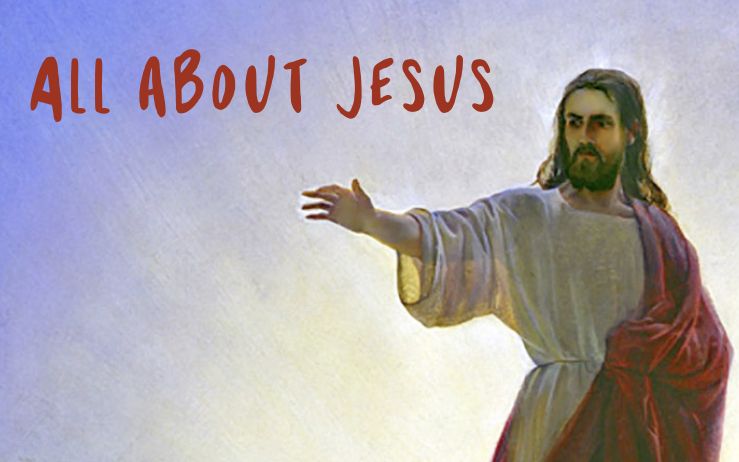
In a world filled with countless distractions and fleeting pursuits, it’s essential to remember the core of our faith and existence: Jesus Christ. Colossians 1:14-20 beautifully encapsulates the supremacy and centrality of Jesus in all things. Let’s delve into this profound passage and explore why it’s truly all about Jesus.
Redemption and Forgiveness
At the heart of our spiritual journey lies redemption—the liberation from sin’s bondage through Jesus’ sacrifice. Colossians 1:14 reminds us that in Him, we find forgiveness, a fresh start that renews our souls and redefines our lives. This redemption is not earned; it is a divine gift, a testament to God’s boundless grace and mercy.
The Image of the Invisible God
Jesus is the visible representation of the invisible God (Colossians 1:15). In Him, we see the fullness of God’s character—His love, compassion, wisdom, and power. When we look to Jesus, we gain a clearer understanding of who God is. This realization deepens our relationship with the Divine and draws us closer to His eternal presence.
Creator and Sustainer
Everything in heaven and on earth, visible and invisible, was created through and for Jesus (Colossians 1:16). He is not only the Creator but also the Sustainer of all things. Every aspect of the universe holds together in Him (Colossians 1:17). This truth offers us immense comfort; knowing that our lives and the cosmos are under His sovereign control brings peace amidst chaos and uncertainty.
Head of the Church
Jesus is the head of the body, the Church (Colossians 1:18). As believers, we are part of this divine body, called to unity and purpose under His leadership. Our connection to Christ empowers us to serve, love, and grow together, reflecting His glory in a world that desperately needs His light.
The Firstborn from Among the Dead
Jesus’ resurrection is the cornerstone of our faith. He is the firstborn from among the dead, ensuring our victory over death (Colossians 1:18). His triumph guarantees our future resurrection and eternal life, filling us with hope and courage to face life’s trials.
The Fullness of God and Reconciliation
God’s fullness dwells in Jesus, and through Him, all things are reconciled to Himself (Colossians 1:19-20). This reconciliation, achieved through His blood shed on the cross, restores our broken relationship with God. It is a call to embrace peace, both with God and with each other, fostering harmony in our hearts and communities.
Embracing the Supremacy of Christ
In every moment, every challenge, and every joy, let us fix our eyes on Jesus. He is our Redeemer, the image of the invisible God, the Creator, the Head of the Church, the Firstborn from the dead, and the Reconciler of all things. Our lives find their true meaning and purpose in Him. As we walk this spiritual journey, may we always remember: it’s all about Jesus.
In the quiet moments, when the world stills and night embraces the soul, the thoughts of a brokenhearted lover surface. Like ancient Trojans, these memories slip past the fortified walls, bringing with them a cascade of emotions once thought securely locked away.
Despite the steadfast resolve to stay guarded, to protect the heart from further pain, these memories are relentless. They come unbidden, weaving through the defenses with a subtle grace, reminding us of the love that once was. The laughter, the shared dreams, the tender moments – they all march through, as if to prove that the heart, no matter how wounded, still yearns to feel, to remember.
It is in these moments of vulnerability that the soul whispers truths. That love, though lost, was real. That the pain of remembrance is a testament to the depth of that connection. The brokenhearted lover, despite the struggle to remain unyielding, finds solace in these stolen reveries. For in the act of reminiscing, there is a quiet acceptance of the past, a recognition of the beauty that once filled the heart.
Guarded though we may try to be, the Trojans of our memories teach us that to love is to be human. And in the quiet aftermath, when the memories retreat and the heart stands fortified once more, we carry with us the strength that only comes from embracing both the joy and the sorrow of what once was.
In this dance of remembrance, we learn that to guard the heart is not to close it off completely. Instead, it is to honor the past, to acknowledge the pain, and to find the courage to love again, knowing that our hearts, though scarred, are still capable of deep and profound connection.
In the stillness of the morning, as the first light of dawn breaks through the darkness, we are reminded of the unwavering presence of our Heavenly Father. He is not just a distant deity but a personal and loving God, a Good Good Father who knows us intimately and loves us unconditionally.
Our God is a Father who sees beyond our imperfections and embraces us with open arms. He understands our struggles and rejoices in our triumphs. His love is a constant in our lives, unshaken by our failures and ever-present in our joys. It is in His gentle whispers that we find comfort, in His guiding hand that we find direction, and in His boundless grace that we find hope.
The beauty of God’s fatherhood lies in His infinite patience and mercy. Like a shepherd tending to his flock, He guides us through the valleys of life, ensuring that we never walk alone. When we stray, He seeks us out and brings us back to His loving embrace, never condemning but always forgiving. His heart is a wellspring of compassion, overflowing with a love that is both tender and strong.
In our moments of doubt and fear, we can lean on the truth that our Good Good Father is ever faithful. He is our refuge in times of trouble, our rock in the midst of chaos. His promises are true and His word unfailing. He invites us to cast all our anxieties upon Him, assuring us that His shoulders are broad enough to bear our burdens.
The goodness of our Father is also reflected in His provision. He meets our needs, often in ways we do not expect, reminding us that He is the source of all blessings. Whether in abundance or in scarcity, His provision is perfect, teaching us to trust in His timing and His wisdom.
As we journey through life, let us continually draw near to our Good Good Father, allowing His love to transform us. Let His goodness inspire us to love others as He loves us, to extend grace as He extends grace to us, and to live in a manner that reflects His heart to the world.
Today, let us pause and give thanks to our Heavenly Father, for He is good, and His love endures forever. In His presence, we find our true identity as beloved children, cherished and treasured beyond measure. Indeed, we serve a Good Good Father, whose love knows no bounds and whose goodness is beyond comprehension.
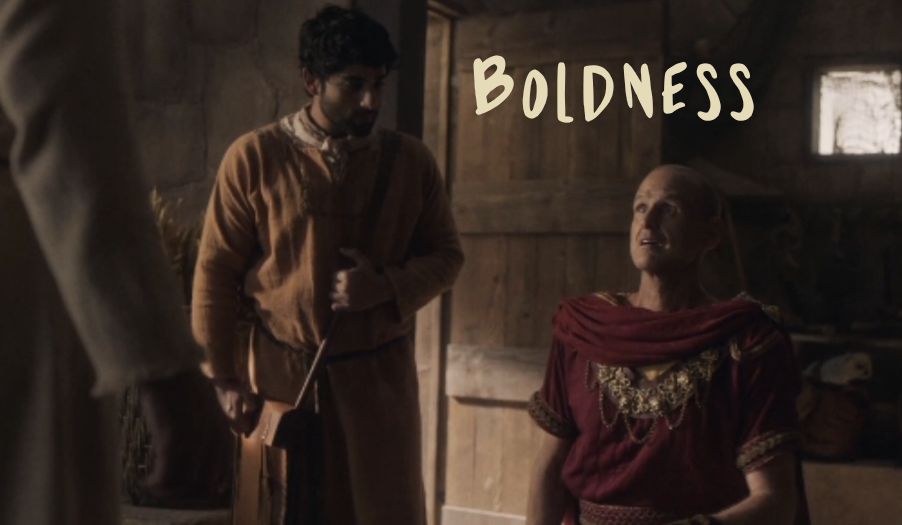
In the Gospel of Luke, Chapter 7, we encounter a powerful story that reveals the boldness of faith and the boundless compassion of Jesus. This narrative centers around a Roman centurion, a man of authority and power, yet he approaches Jesus with remarkable humility and profound faith to seek healing for his beloved servant.
The centurion’s boldness is not in the form of audacity or arrogance, but rather in his deep belief in Jesus’ authority and mercy. Though he is a man accustomed to giving orders and having them obeyed, he recognizes in Jesus a greater authority—one that commands the very forces of life and death. This recognition leads him to send elders of the Jews to plead with Jesus on his behalf, acknowledging his unworthiness to approach Jesus directly.
When Jesus begins to make His way to the centurion’s home, the centurion sends friends with a message that reflects his incredible faith: “Lord, do not trouble yourself, for I am not worthy to have you come under my roof. Therefore, I did not presume to come to you. But say the word, and let my servant be healed” (Luke 7:6-7). This declaration reveals a bold faith that understands the power of Jesus’ word. The centurion believes that distance and physical presence are no barriers to Jesus’ healing power.
Jesus is astonished by this display of faith. He turns to the crowd following Him and says, “I tell you, not even in Israel have I found such faith” (Luke 7:9). Here, Jesus acknowledges the centurion’s bold faith, which transcends cultural and religious boundaries. The centurion, a Gentile and a representative of an occupying force, exemplifies a faith that many in Israel had not yet shown.
This story challenges us to consider the nature of our own faith. Do we possess the boldness to believe in Jesus’ power and authority, even in situations that seem hopeless or beyond human control? The centurion’s faith was not based on physical evidence but on a deep trust in Jesus’ word and character.
Moreover, this passage encourages us to approach Jesus with humility and confidence. The centurion did not let his status or his sense of unworthiness prevent him from seeking Jesus’ help. He understood that Jesus’ love and power are available to all who come to Him in faith, regardless of their background or status.
In our lives, we are called to exhibit this same boldness. Whether we are facing illness, uncertainty, or any form of hardship, we can approach Jesus with the confidence that He hears us and has the power to heal and restore. Our faith, like the centurion’s, should recognize that Jesus’ word is sufficient and His authority is supreme.
Let us be inspired by the centurion’s boldness, his deep faith, and his recognition of Jesus’ divine authority. May we, too, approach Jesus with a faith that trusts in His word and power, confident that He is able to meet our needs and transform our lives.
In moments of doubt or difficulty, remember the centurion’s example and the response of Jesus. Bold faith opens the door to divine intervention and reveals the boundless compassion of our Savior. Trust in His word, and let your faith be a testimony of His power and love.
In the stillness of early morning, as the first light of dawn begins to pierce through the darkness, there exists a sacred moment of awakening. This is not just a physical awakening but a spiritual one—a profound invitation to reconnect with the deepest parts of our souls and the divine essence that permeates our being.
Life has a way of pulling us into a whirlwind of distractions, responsibilities, and noise. We rush from one task to another, rarely pausing to breathe, to feel, to simply be. In this relentless pursuit of doing, we often lose touch with the core of who we are. Yet, within each of us lies a gentle but persistent whisper, a call to awaken to a higher consciousness and purpose.
This is your wake-up call.
It is a call to slow down and listen—to truly listen—to the quiet yearnings of your heart and the wisdom of your spirit. It is an invitation to embrace the present moment with mindfulness and gratitude, to see beyond the surface of daily life and recognize the sacredness in the mundane.
Waking up spiritually means becoming aware of the interconnectedness of all things. It means acknowledging that you are not separate from the world around you but an integral part of a vast, living tapestry. This awareness brings a profound sense of peace and belonging, reminding you that you are never alone on this journey.
In this awakened state, you begin to see life through new eyes. Challenges transform into opportunities for growth, and every encounter becomes a chance to give and receive love. Your actions become more intentional, guided by a deeper understanding of your true purpose and the impact you have on the world.
This wake-up call is also a reminder of the power of compassion and kindness. As you awaken, you start to recognize the divine spark in others, fostering a sense of unity and empathy. You become a beacon of light, inspiring and uplifting those around you, creating ripples of positive change that extend far beyond what you can see.
Answering this call is not always easy. It requires courage to face the shadows within, to let go of old patterns and beliefs that no longer serve you. But in doing so, you make space for new growth, for a more authentic and fulfilling life.
So, take a deep breath and allow yourself to be present in this moment. Feel the connection to the earth beneath your feet, the air filling your lungs, the beating of your heart. Embrace the beauty and wonder of simply being alive.
This is your wake-up call. Embrace it with an open heart and a willing spirit, and step into the fullness of who you are meant to be. The world needs your light. Shine brightly.







 Way & Soul