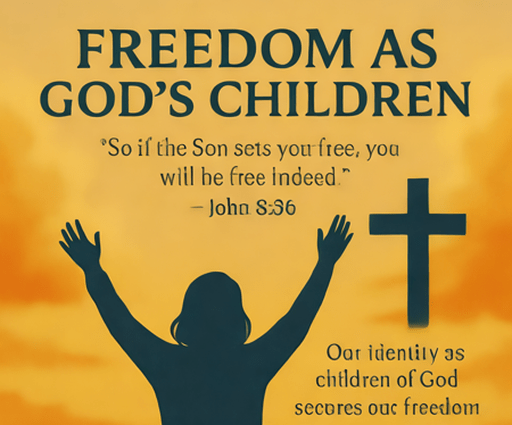
On the way back from church camp, I saw a song pop up on my phone and decided to listen to it, and though it wasn’t written with Jubilee in mind, it ended up capturing the heart of this year’s camp theme in a way that surprised me. Jubilee is about freedom—God’s promise to restore, redeem, and release us from bondage—but as I listened, I realized that true freedom doesn’t come without struggle. The song spoke to the brokenness of the world, the weight of suffering, and the deep ache for justice, peace, and the presence of God in dark places. And that’s exactly what Jubilee is meant to address: not just a time of celebration, but a radical overturning of oppression and despair. Sometimes, before we can live free, we have to come face to face with the things that hold us captive—fear, pain, disappointment, sin—and allow God to break those chains, even when it hurts. Freedom in Christ isn’t always instant or easy; it often comes through a journey of trusting God in the dark, choosing hope when everything feels hopeless, and surrendering when we don’t understand. The song reminded me that while we wait for full restoration, we can still stand firm in our identity as children of God, even when it feels like the world is falling apart. Jubilee isn’t the absence of pain—it’s the promise that our pain isn’t the end, and that God is still in the process of making all things new.
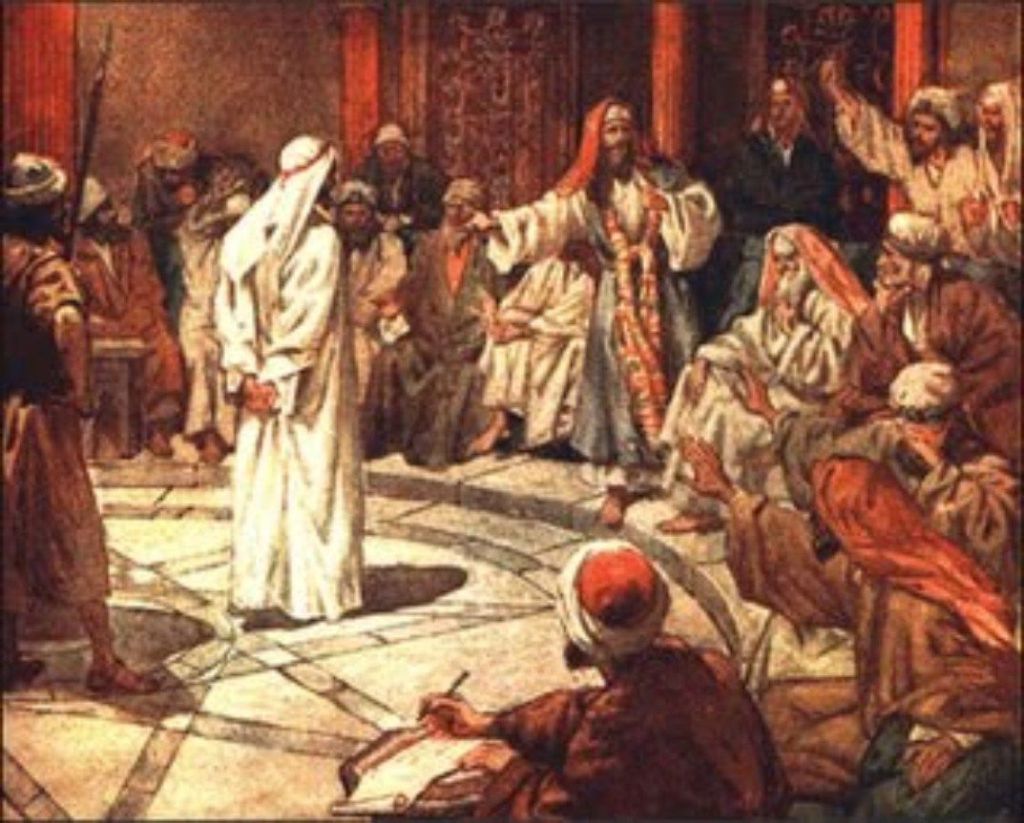
In Acts 23, we find Paul standing trial—falsely accused, misunderstood, and under pressure from every side. But he is unmoved. Because the man standing there is not the man he used to be.
He is a man who’s experienced his own Jubilee. He has been set free—spiritually, emotionally, eternally. And the power of that freedom sustains him even in the face of opposition.
So tonight, I want to talk about how we, too, can live like we’ve been set free, just like the apostle Paul did.
Let’s not just see Jubilee as a distant Old Testament tradition. Let’s not treat it as a camp theme that we forget once we come home. Let’s look at Paul’s life and discover what it really means to walk in the liberty of Jesus.
1. Freedom in the Midst of Trials
So as we begin, the first point I want to talk about here this evening is about “Embracing Freedom in the Midst of Trials.” If you have your bibles we are going to start reading in Acts 23 verse 1, which says:
“Paul looked straight at the Sanhedrin and said, ‘My brothers, I have fulfilled my duty to God in all good conscience to this day.’”
Lets pause here for a second:
Think about where Paul is: He’s in a courtroom, surrounded by religious leaders who want him dead. He has been beaten, rejected, and now stands on trial again for simply preaching the gospel.
And yet—he looks them in the eye and speaks with boldness. Why?
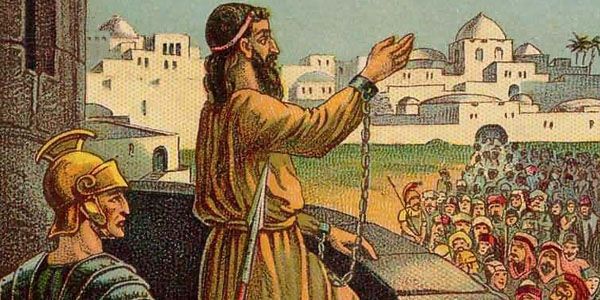
Because Paul is a free man, even while he’s in chains.
This is the paradox of the Christian life. Outwardly, Paul is a prisoner. But inwardly, he is free. He has peace. He has purpose. He has the presence of Christ.
That’s real freedom.
Freedom doesn’t mean the absence of problems. It means the presence of God in the middle of the problem. It means we can stand firm in our identity, even when the world questions us. We can have peace, even when things are uncertain. We can walk in confidence, even when we are surrounded by chaos.
Paul is able to say, “I have fulfilled my duty to God in good conscience,” because he knows who he belongs to. He knows what he’s been called to. And he knows he is no longer the man he once was.
So let me ask you: What would it look like for you to live with that kind of confidence this week? What would it look like to trust God even when you’re tired, overwhelmed, or unsure?
2. The Freedom of a Forgiven Life
Now lets move on to the second point I want to talk about here this evening which is “The Freedom of Living a Forgiven Life.”
The Year of Jubilee was, above all, a year of forgiveness.
Debts were canceled. Relationships were restored. Slaves were freed. It was a reminder that grace was real and that second chances were possible.
Paul knew that kind of forgiveness on a deeply personal level.
If you were to look back in Acts chapter 7, Paul—then called Saul—was standing by approving the stoning of Stephen, the first Christian martyr. He was the enemy of the church, the embodiment of judgment.
But by Acts chapter 9, everything changed. Paul met Jesus. And in that moment, the very core of who he was unraveled and was rebuilt by grace.
He went from persecutor to pastor. From enemy to evangelist. From self-righteous to surrendered.
Paul wrote in Romans 8:1:
“There is now no condemnation for those who are in Christ Jesus.”
He didn’t just preach that—he lived it.
Some of you tonight may be carrying guilt. Maybe from something you said, something you did, or something you failed to do. Maybe the enemy keeps reminding you of who you used to be.
But its important to realize that in Christ, you are no longer condemned. You are forgiven. And that forgiveness doesn’t just wipe away your past—it launches you into your future.
Paul’s life is proof that God doesn’t just redeem stories—He rewrites them. So if there are any of you here tonight who are facing guilt and shame, just reflect on this, especially if you going to camp this week, and I promise you by the end of the week you will no longer feel any if the guilt and shame you were once feeling. Instead you will feel transformed and renewed, in a life that is freeing and forgiving in christ.
3. God’s Sovereignty is the Foundation of Freedom
Now lets move on to the second point I want to talk about here this evening which is “The Foundation of Our Freedom is God’s Sovriegnty.”
If you still have your Bibles with you, let us look at one of the most powerful moments in Acts 23—verse 11, which says:
“The following night the Lord stood near Paul and said, ‘Take courage! As you have testified about me in Jerusalem, so you must also testify in Rome.’”
Lets pause again for one moment. Imagine how Paul must have felt at this time. The trial was intense. The accusations were piling up. And then—God shows up.
Not with an earthquake. Not with a miracle escape. But with a whisper: “Take courage.”
And that changes everything.
Because God wasn’t just reminding Paul of his mission—He was reminding Paul that He was still in control.
In Jubilee, the people returned to their inheritance. In Acts 23, God returns Paul to his calling. He restores his courage. He reminds him of the journey still ahead.
You may feel stuck right now. You may feel like you’re going nowhere. But God’s plan for you is not finished. And His presence is not distant. He is near. He is speaking.
And when you know that God is in control, you can live in freedom—even when nothing looks certain.
4. Living Jubilee Today
Finally, this brings me to final point for this evening, which is “Living in Jubilee Today”
Some of you here tonight may be asking yourself “What does it look like to live of life of Jubilee?”
Here are three steps we can take to do it.
# 1 is to Live Forgiven. Stop carrying shame. Stop trying to earn what Jesus already paid for. Accept the grace of God, and let that grace define you more than your failures ever could.
# 2 is to live a life that is Freeing to Others. Forgiven people forgive. Loved people love. People who’ve been shown mercy become people who give mercy. At camp, and in life, look for ways to lift others up. Speak hope. Choose kindness. Be a reflection of the freedom you’ve been given.
# 3 is to Trust the Process. Jubilee reminds us that God is in control. That He restores what was lost. That He brings us back home. So trust Him. Even when you can’t see the whole picture—He’s working.
So in Conclusion: Live Like You’ve Been Set Free
But before close this evening, I’ll leave you with the same question we started with:
What would it look like for you to live like you’ve been set free?
Would you worship more freely? Would you let go of fear? Would you forgive someone who hurt you? Would you stop hiding behind shame? Would you step into your calling like Paul did?
Because here’s the truth:
The same God who proclaimed liberty in Leviticus…
The same Savior who met Paul on the road to Damascus…
The same Spirit who stood beside Paul in the courtroom…
That same God is here. Tonight. With you.
Let this be the week you stop surviving and start living. The week you stop dragging your chains and start walking in grace. The week you stop fearing your future and start trusting God’s hand.
Let the chains fall. Let the fear go. Let grace flow.
In Acts 22, we find a profound moment in the life of the apostle Paul. Before a violent and hostile crowd, he speaks not with weapons, nor with defense, but with the power of his testimony. It is here that we see one of the clearest reflections of God’s transformative work in a human life, and the quiet yet unshakable power of sharing one’s own story of divine intervention.
Paul’s defense before the crowd is not just a narrative of personal history; it is a witness to the grace of God at work. He recounts his former life as a zealous Pharisee, intent on persecuting the followers of Jesus. Paul, once named Saul, was blind in spirit, driven by a sense of duty but completely unaware of the depth of his error. Then, in a moment of divine interruption, the risen Christ confronted him on the road to Damascus. This moment became the pivot of Saul’s life—his eyes were opened, his heart softened, and his life was utterly redefined.
The beauty of this story is not just in the dramatic nature of Saul’s conversion, but in the way it speaks to the undeniable power of God to reach even the most unlikely hearts. Saul, once a murderer of Christians, became Paul, a servant of Christ and a messenger of His love and truth. This story is a testimony not only of God’s ability to save but of His ability to redeem even the deepest of pasts, to transform the most hardened of hearts.
Paul’s journey is a reflection of the unpredictability of God’s grace. Just as God called Saul out of the darkness and into the light, so too He calls each of us, though our paths may look different. God’s redemption doesn’t follow a linear or logical course—it is a grace that meets us in the most unexpected places, often in moments when we are least aware of our need for it.
What stands out most in Acts 22, however, is the humility with which Paul speaks. There is no boasting in his speech, no prideful attempt to show his own righteousness. Rather, he points to God’s faithfulness at every turn. He recounts his blindness, not as a mark of weakness, but as the very moment through which God opened his eyes to a deeper truth. He speaks of his calling with a sense of awe and gratitude, not self-glorification. For Paul, everything points back to the grace of God, which has carried him through even the darkest chapters of his life.
This reminds us that our stories matter. It is not the perfection of our lives that God is interested in, but the authenticity of our hearts and the willingness to share how His grace has changed us. We are all living testimonies of God’s redemptive power—whether our lives are filled with dramatic conversions, quiet seasons of growth, or slow but steady transformations. Every step we take in obedience is a testimony to His faithfulness.
As we look at Paul’s story in Acts 22, we are invited to consider our own. What have we been rescued from? What darkness has God pulled us from? How has His mercy made us new? Our personal testimonies carry the weight of His glory. God uses us, despite our imperfections, to speak of His grace. Paul’s testimony did not result in the salvation of everyone present, yet it planted a seed, stirring hearts and challenging minds. We may never know the full impact of our words, but we can trust that sharing our story is part of God’s larger story of redemption.
Paul’s words also remind us of the cost of discipleship. His testimony, though powerful, was not met with acceptance. In fact, it provoked hostility. The same crowd that had once cheered for him in his zeal for the law now turned against him for speaking of Jesus. This shows us that obedience to God is often met with resistance, but the call to testify remains. Just as Paul was faithful in his mission, we are called to be faithful in our own.
As we reflect on this passage, let’s remember that God has an unbreakable plan for each of our lives. His grace reaches beyond what we see, beyond our mistakes, beyond the judgments others may place on us. We are not defined by our past but by God’s calling and the work He is continually doing in us. Like Paul, we are chosen for something greater than ourselves. We are part of His story of reconciliation, redemption, and renewal.
Let this truth sink deep into your heart today: You are a living testimony. Your life—whether filled with the dramatic or the quiet—bears witness to the unfathomable grace of God, and that testimony has the power to change the world, one life at a time. Speak it with humility. Share it with love. And remember, just as Paul’s past didn’t disqualify him from God’s calling, neither does yours.
Closing Reflection: God doesn’t ask us to be perfect or to have all the answers—He only asks us to speak truthfully of His work in our lives. Like Paul, we are not called to argue or debate, but to testify to the life-changing power of God’s grace. And that is enough.
May we be faithful in sharing our own stories, trusting that God will use them in ways we may never fully understand, but will always bring Him glory.
 Way & Soul