
“Love the Lord your God with all your heart and with all your soul and with all your mind.”
Matthew 22:37
-
I Love My Church
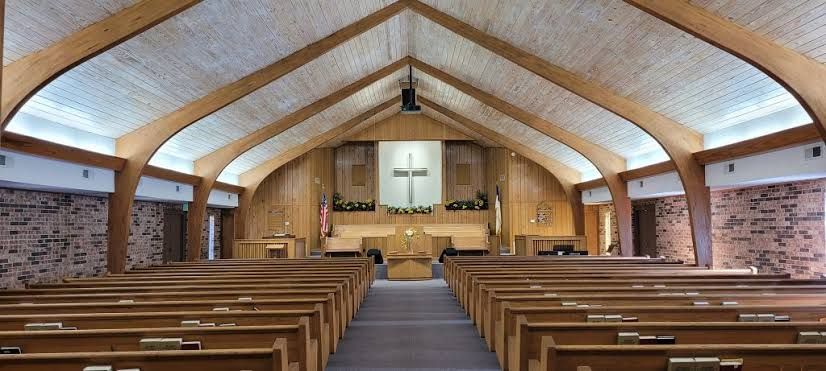
It’s hard to believe how much time has passed since my last post back in November. These months have gone by quickly, and while I’ve certainly been busy, they’ve also been filled with a lot of quiet reflection. Reflection on life, on faith, and especially on the church that means so much to me—West Bauxite Missionary Baptist Church. Sometimes stepping back gives us the clarity we don’t always have when we’re rushing forward, and in that stillness, God has been doing some gentle but important work in my heart.
Like many churches today, ours has faced some challenges. Attendance isn’t always what we hope for, and at times it feels like enthusiasm can fade or grow weary. These realities can be discouraging if we let them be, but I’ve come to realize that acknowledging them honestly is not a sign of weakness—it’s a sign that we care. When we notice these struggles, it means we still believe God has more for us, and that belief is where renewal begins.
Even in moments when things feel uncertain, God’s light is still present. He specializes in bringing hope where it seems thin and strength where fatigue has set in. I truly believe He can turn things around—not just in numbers, but in hearts. God can restore passion, renew vision, and reignite enthusiasm when we place our trust fully in Him. What feels like a low point can often become the very place where God begins something new.
This January, we were blessed to celebrate a major milestone: the 75th anniversary of West Bauxite Missionary Baptist Church. Seventy-five years of ministry is no small thing. It represents generations of faithful believers, countless prayers lifted, lives changed, and a testimony of God’s enduring faithfulness. If God has sustained this church for 75 years, I have no doubt He intends to continue guiding it into the future.
As we look ahead, our church is also prayerfully considering the possibility of building a new fellowship hall. This isn’t just about constructing a building—it’s about creating a space for connection, encouragement, and ministry. A place where people can gather, relationships can deepen, and fellowship can thrive. I truly believe that something like this could help spark renewed enthusiasm and bring fresh energy to our church family, allowing us to serve one another and our community in new and meaningful ways.
I love my church. I love its people, its history, and the future God is shaping for it. West Bauxite Missionary Baptist Church is more than a building—it’s a family, rooted in faith and held together by God’s grace. I want to invite everyone—whether you’ve been coming faithfully, have been away for a season, or are searching for a church home—to come and experience what God is doing among us. Come be a part of His plan, feel His love, and walk with us as we trust Him with the future He has prepared for our church.
-
Rejoice, and Give Thanks
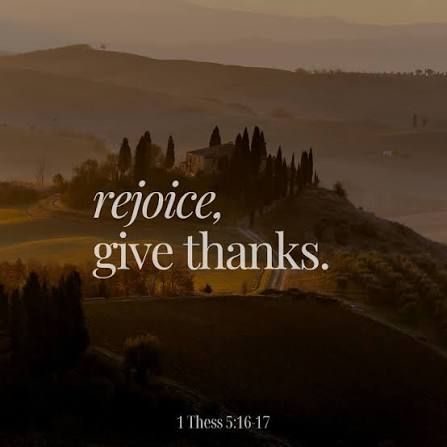
There are moments in life when gratitude does not come easily.
Not because we don’t have blessings—
but because the weight of what we’re carrying sits so heavily on the heart.I’m in one of those moments now.
My sister is getting ready to leave for basic training.
Part of me beams with pride when I think about her courage—her willingness to step into something challenging, something bigger than herself. She’s preparing to serve, to grow, to become stronger in ways most people will never have to imagine.But another part of me aches.
There’s something tender about watching someone you love pack their life into a few bags. You start noticing little things—how her laughter fills the house, how her shoes scattered near the door have always annoyed you just a little, but now somehow feel comforting. You realize how deeply you’ll miss all the small, ordinary moments.Change has a way of exposing the truth:
love always costs something.And in times like this, when emotions tug at both pride and sorrow, the invitation from God feels both comforting and challenging:
Rejoice, and give thank.At first, it feels like too much to ask.
How can I rejoice when part of me is grieving?
How do I give thanks when I’m wrestling with fear, uncertainty, and the quiet ache of letting go?But gratitude isn’t pretending everything is fine.
It’s learning to see God’s fingerprints even in the things that hurt.As I sit with my emotions, I start to notice the places where thanksgiving gently appears—not as a command, but as a lifeline.
I give thanks for my sister’s bravery, the kind that blooms from a place deep within her.
I give thanks for the love between us, a love strong enough to make goodbyes feel heavy.
I give thanks that God will be her Strength when I cannot be, her Shield when I cannot stand beside her.
I give thanks that the same God who walks with me through my worry will walk with her through her training, her fatigue, her growth, her victories.And I give thanks for the quiet ways God steadies my own heart—
in reminders of His faithfulness,
in the peace that arrives in small waves,
in knowing that distance does not weaken love,
and change does not shake the presence of God.Rejoicing in hard seasons is not a denial of pain;
it is an act of trust.
It is saying, “God, I see the difficulty—but I also see You.”
It is choosing to believe that He is working in the unseen, preparing us for what comes next, strengthening us in ways we do not yet understand.Life may be stretching me right now,
but it is also teaching me.
Teaching me that gratitude is not an emotion—it is a posture.
Teaching me that joy is not the absence of struggle—it is the presence of God.
Teaching me that giving thanks does not require perfect circumstances—only an open heart.So today, even with the ache of goodbye approaching,
even with the unknown wrapped around the future,
I choose to rejoice.
I choose to give thank.
I choose to trust that God holds my sister, and He holds me too.And in that trust, I find a quiet strength—
the strength to keep moving,
to keep believing,
and to keep giving thanks, even here, even now.
-
When We Can’t Wait For God
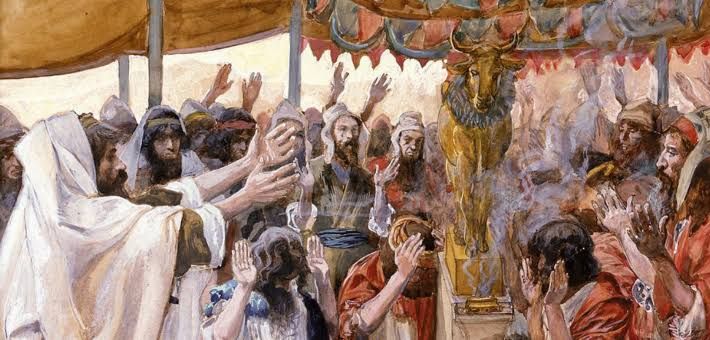
Exodus chapter 32 stands as one of the most sobering and instructive passages in all of Scripture. It reveals the tragic frailty of the human heart and the peril of turning aside from the living God, even in the very shadow of His glory. Israel, newly delivered from bondage and standing at the foot of Mount Sinai, falls swiftly into idolatry while Moses communes with God on the mountain. The people, impatient for his return, demand a tangible object of worship. Aaron, yielding to their clamor, fashions a golden calf, proclaiming, “These be thy gods, O Israel, which brought thee up out of the land of Egypt.”
I. The Roots of Idolatry: Impatience and Forgetfulness
The sin of the golden calf was not merely the making of an image, but the manifestation of a deeper spiritual disease: impatience with God’s timing and forgetfulness of His covenant. Israel had witnessed the might of the Lord in their deliverance; yet, in the space of a few days, their faith faltered. When divine providence seemed delayed, they sought visible assurance.
So it is with the human soul. When the presence of God seems hidden, when prayers appear unanswered, and when heaven is silent, we are tempted to grasp after substitutes — to seek comfort in what is seen rather than trust in what is unseen. The golden calf is thus not only Israel’s folly but a symbol of all human attempts to replace faith with sight.
II. The Wrath of God and the Mediation of Moses
The narrative then turns to God’s righteous anger. The Lord declares His intent to consume the people for their transgression, offering to make of Moses a new nation. Yet Moses, the faithful servant of God, intercedes on behalf of Israel. He pleads not on the basis of their merit, but upon the honor of God’s name and His covenant promises to Abraham, Isaac, and Jacob.
This act of intercession foreshadows the work of our Lord Jesus Christ — the greater Mediator, who stands before the Father on behalf of sinners. Just as Moses interceded for a rebellious nation, so Christ intercedes for His church, pleading not our righteousness but His own. Through His mercy, divine wrath is tempered, and grace prevails over judgment.
III. The Breaking of the Tablets: Judgment and Renewal
When Moses descends and beholds the idolatry of the people, he casts down the tablets of the Law, breaking them at the foot of the mountain. This act is not mere anger but a profound symbol: the covenant has been broken by the sin of the people. Before renewal can occur, the old must be shattered. Later, new tablets are given — a sign of divine forgiveness and the restoration of relationship.
Likewise, in the spiritual life, there are moments when God permits the breaking of what is outwardly good, so that a deeper and truer covenant might be written upon our hearts. As the prophet Jeremiah would later declare, “I will put my law in their inward parts, and write it in their hearts” (Jeremiah 31:33). Thus, the breaking becomes the means of renewal.
IV. The Call to Faithful Worship
Exodus 32 is not merely a historical account; it is a warning to every generation. God demands worship that is pure, spiritual, and rooted in truth. The golden calf may have been melted and ground to dust, but idols still arise wherever the human heart seeks satisfaction apart from God. Whether our idols are fashioned from gold, ambition, pleasure, or pride, they remain affronts to the holiness of the Lord.
Therefore, the call of this passage is to steadfastness — to wait upon God even in the silence, to trust His timing, and to guard the purity of our worship. True faith clings to the unseen presence of God and rests upon His Word alone.
A Closing Prayer
Almighty and Everlasting God,
who didst show mercy to Thy people when they turned aside to idols,
grant unto us, we pray Thee, steadfast hearts,
that we may not grow weary in waiting upon Thee,
nor seek after false comforts in times of delay.
Write Thy law anew upon our hearts,
and by Thy Holy Spirit keep us faithful to Thy covenant,
through Jesus Christ our Lord. Amen.
-
Reverence and Reality
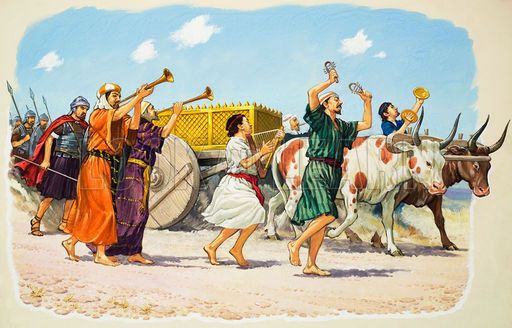
There’s a passage in 2 Samuel 6 that many of us quietly wrestle with. It’s the moment when King David, full of passion and zeal, sets out to bring the Ark of the Covenant back to Jerusalem. The mood is joyful, the music is loud, and the celebration is grand. This feels like worship—it looks like worship—but then something unexpected, even unsettling, happens.
As the oxen pulling the cart stumble, Uzzah reaches out his hand to steady the Ark, and God strikes him dead on the spot.
It’s a jarring moment. A moment that, on the surface, feels unfair. Wasn’t Uzzah just trying to help? Wasn’t he doing the right thing? But as we sit with this story and listen with the ears of the Spirit, we realize the lesson isn’t about punishment—it’s about perspective.
God doesn’t need us to hold Him up.
The moment Uzzah reached out, perhaps with the best of human intentions, he forgot that the God who created the heavens and the earth is not a deity who teeters and falls. He doesn’t need to be caught. He doesn’t need to be protected. The Ark wasn’t just a box—it was the representation of God’s holy presence among His people. And God had already given clear instructions for how it was to be carried—on the shoulders of the Levites, not on a cart, and certainly not touched.It wasn’t a matter of Uzzah’s sincerity. It was a matter of God’s holiness.
This passage confronts us with a difficult but necessary truth: Sometimes our good intentions still fall short of God’s instructions.
In our own lives, how often do we try to “steady” God? How often do we rush to protect His name, His church, His reputation—as though He might collapse without our efforts? We plan, we strategize, we innovate, we build platforms and programs—all to “carry” God in ways that make sense to us. But the question that echoes from 2 Samuel 6 is not whether we are passionate about God, but whether we are being obedient to Him.
This passage also teaches us that worship is not about what feels right to us—it’s about what’s right in His eyes.
David’s first attempt to bring the Ark was filled with energy and excitement, but not with obedience. The method didn’t match the mandate. It wasn’t until David paused, reflected, and returned to the Word of the Lord that he realized something crucial: God is not moved by noise, emotion, or effort alone—He is moved by hearts that honor His holiness.And when David brought the Ark back the second time—carried the right way, with sacrifice and reverence—then the celebration took on its full meaning. There was joy again, but now it was joy rooted in obedience.
We live in a time when worship is often shaped by personal preference, emotion, and experience. But the message of this chapter reminds us: Worship is not ours to define. It is God’s to direct. We cannot reduce worship to a feeling or a formula. True worship begins when we approach God on His terms, not our own.
There’s nothing wrong with creativity, beauty, or even emotion in worship. But without reverence, those things become noise. Without obedience, our worship becomes self-expression rather than God-exaltation.
So maybe the deeper invitation of 2 Samuel 6 is to ask ourselves some searching questions:
Have we made worship about what moves us, rather than what pleases Him?
Have we tried to steady what God never asked us to carry in our way?
Have we forgotten that the God we approach is still holy, still consuming, still utterly unlike us?And have we remembered that the safest, truest place of worship is always the one that starts in surrender?
God doesn’t need our hands to hold Him up. He asks for our hearts to be bowed down.
May we learn to worship not just with passion, but with awe.
Not just with celebration, but with submission.
Not just with hands lifted high, but with lives laid low.Because only then do we truly see Him for who He is: Holy, Sovereign, and Worthy of it all.
-
The Glory of Justification
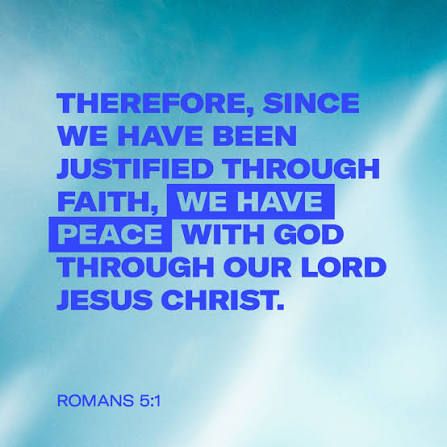
“Therefore being justified by faith, we have peace with God through our Lord Jesus Christ.” – Romans 5:1 (KJV)
Romans 5 presents one of the clearest declarations of the blessings that flow from justification by faith.
First, we are given peace with God—not merely a feeling, but a restored relationship through the blood of Jesus Christ. The war between sinful man and a holy God is ended at the cross.
Through Christ, we have access by faith into this grace wherein we stand (v.2). We do not waver in and out of God’s favor. We stand firmly in grace, secured by the finished work of our Savior.
And we rejoice in hope of the glory of God. This is not a hope that wishes—it is a hope that knows. Our future glory is assured because Christ has already made the way.
But Paul goes further: “We glory in tribulations also…” (v.3). Why? Because tribulation is not meaningless. For the believer, suffering produces patience, patience brings experience, and experience gives birth to a hope that shall not make us ashamed—because “the love of God is shed abroad in our hearts by the Holy Ghost” (v.5).
This chapter reminds us of the depth of God’s love: “While we were yet sinners, Christ died for us.” (v.8). Not when we were righteous. Not when we were seeking Him. But when we were enemies, ungodly, and helpless—He loved us, and He gave His Son.
Romans 5 teaches us that salvation is not just about being forgiven; it’s about being reconciled, secured, and kept by the love of God. If Christ died for us when we were sinners, how much more shall He keep us now that we are His?
-
Faith in Legacy
The loss of a public figure like Charlie Kirk has stirred many emotions and reflections. It’s a moment where people from all walks of life pause to consider the fragility of life and the certainty of death. No matter our political views or how we perceive his life and work, his passing is an opportunity for us all to remember a foundational spiritual truth—our righteousness before God is not determined by our accomplishments, positions, or even our most passionate ideologies. It’s determined by faith in God’s promises.
Romans 4, especially in its focus on Abraham’s faith, reminds us that righteousness comes not from what we do, but from what we believe. Abraham was declared righteous not because he was perfect, but because he trusted God. The same is true for us. In a world where people often build their identity around accomplishments and public recognition, this is a humbling and liberating truth. It forces us to confront the reality that, ultimately, it is not our works but our faith in God’s grace that justifies us.
The Tragedy of Life’s Fragility and the Hope of Eternal Promise:
Recent events like Charlie Kirk’s passing remind us how fleeting life is. Death doesn’t care about our opinions, accomplishments, or beliefs; it is a reminder that we all face the same end. And yet, this is precisely where the message of Romans 4 offers hope. Paul’s words call us back to the foundational truth that God’s promises are unshakable, even in the face of death.
The chapter invites us to look at Abraham, who believed in God’s promise even when it seemed impossible. Abraham trusted that God could give life to the dead (Romans 4:17), even when the circumstances—his age, his wife’s barrenness—suggested otherwise. This is the kind of faith that is needed when we face loss, grief, and uncertainty. The hope we hold on to is not tied to this world or to our achievements, but to the resurrection power of Jesus Christ, who overcame death itself.
The Question of Legacy:
As we remember the life of Charlie Kirk, many will ask: What will my legacy be? In a society that often measures value by success, influence, and recognition, Romans 4 invites us to reconsider the true nature of our legacy. The legacy of faith is one that transcends the temporal. Just as Abraham was counted as righteous because of his trust in God, so too are we invited to leave a legacy of faith—a faith that points others not to our own works or ideologies, but to God’s faithfulness.
As Paul says in Romans 4:23-25, this righteousness is not just for Abraham; it’s for all who believe in the God who raised Jesus from the dead. Our legacy, at its core, is not about what we’ve accomplished, but about how we’ve trusted God with our lives, even in the face of death.
Faith in the Midst of Tragedy:
In the wake of tragedy, when everything seems uncertain, Romans 4 reminds us of the steadfastness of God’s promises. Faith isn’t the absence of grief or pain—it’s the ability to hold onto hope in the midst of it. Just as Abraham held onto God’s promise when the world around him seemed impossible, we are called to trust in the greater reality of God’s promise of eternal life through Jesus.
In times like these, as we reflect on the passing of a public figure or someone close to us, we are reminded that true peace comes from knowing that we are justified by faith, not by works. As Romans 4 teaches us, “faith is counted as righteousness” (Romans 4:5). Our faith in Jesus Christ is what holds us firm in the face of life’s most difficult moments.
Reflection:
The death of Charlie Kirk, and any loss, brings us face to face with the deepest questions of faith. In moments like this, we are reminded that our hope is not in our achievements or our opinions, but in the promises of God. Are we, like Abraham, able to trust God’s promises even in the darkest moments? Can we hold on to the truth that our righteousness is secured not by our works, but by our faith in Christ?Let us remember that we are justified by faith, that we are heirs of God’s eternal promises, and that our true hope lies in the resurrection power of Jesus Christ.
Prayer:
Father, as we reflect on the life and death of Charlie Kirk and all those we’ve lost, we are reminded of the fragility of life. But we also remember that our hope is in You, and that our righteousness is not based on our works but on our faith in Your promises. Help us to trust You more deeply, especially in times of loss. May our legacy be one of unwavering faith, and may we rest in the hope of the resurrection. In Jesus’ name, Amen. -
The Gift of Righteousness
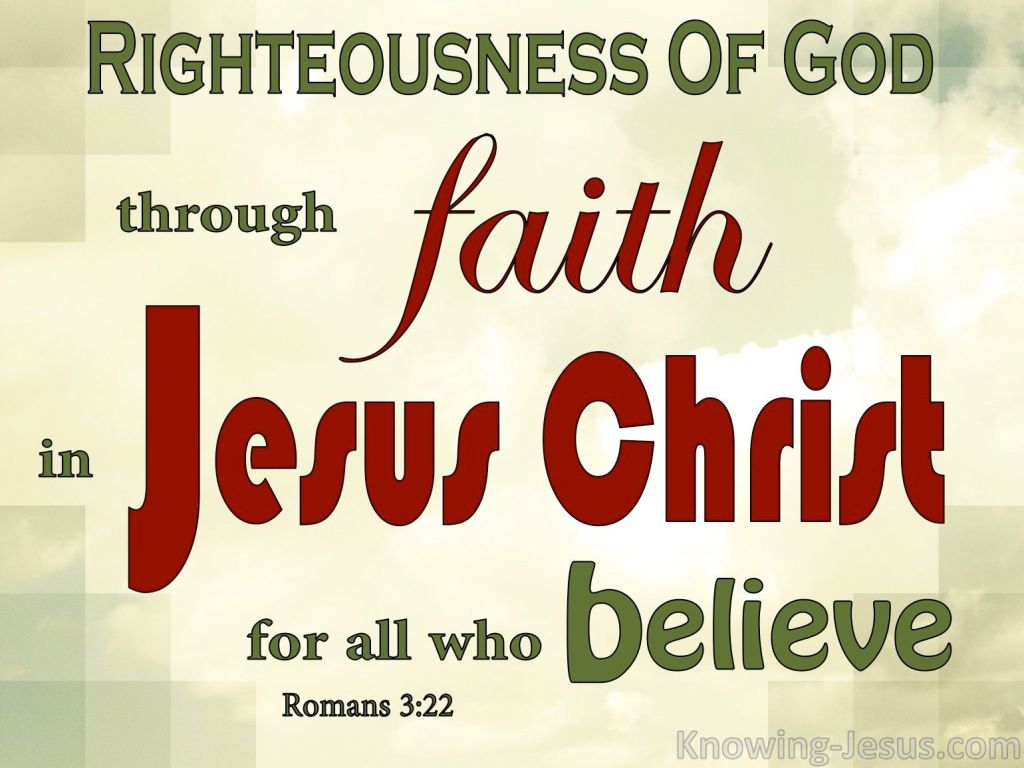
Romans 3 is a powerful chapter that dives deep into the nature of sin, the justice of God, and the amazing gift of righteousness that comes through faith in Jesus Christ. It serves as a reminder that, no matter our shortcomings, we are all offered a way to be justified before God—not through works, but by grace.
Paul begins the chapter by addressing the universal nature of sin. He makes it clear that “there is no one righteous, not even one” (Romans 3:10). This stark truth sets the stage for the depth of the gospel message that follows. If we rely on our own efforts, no matter how good or moral we might think ourselves to be, we all fall short. It’s a humbling realization that brings us face to face with our need for redemption.
Yet, in this same chapter, Paul beautifully introduces the righteousness that is apart from the law—a righteousness that comes through faith in Jesus Christ (Romans 3:21). This gift is not based on anything we can do, but solely on what Christ has done for us. The sacrifice of Jesus on the cross made a way for us to be reconciled to God. His blood, shed for us, covers the debt of our sin, making it possible for us to stand righteous before God.
One of the most stunning verses in this chapter is Romans 3:24: “and all are justified freely by his grace through the redemption that came by Christ Jesus.” This is the core of the gospel message: we are justified freely. It is not something we can earn, nor is it something we deserve. It is a gift given by God’s grace, through the redemptive power of Christ.
But the beauty doesn’t stop there. Paul also addresses the justice of God. He points out that God, in His grace, has not overlooked sin. The cross of Jesus shows God’s righteousness, because God could not simply ignore the penalty for sin. Instead, He placed it on His Son. In doing so, God remains just while making a way for us to be justified.
Romans 3:28 sums up the message of this chapter perfectly: “For we maintain that a person is justified by faith apart from the works of the law.” This is a reminder to all of us that our faith, not our actions, is what brings us into right standing with God. We are no longer bound by the law, but we live in the freedom of grace.
As we reflect on this chapter, we are invited to lay down our own efforts to be “good enough” and embrace the radical grace offered through Christ. It’s a call to humble ourselves, acknowledging that we can do nothing on our own to earn God’s favor, but only through the finished work of Jesus Christ.
May we, in response to this truth, walk in the freedom and joy that comes from being justified by faith. Let our lives be a testimony to the power of grace, and may we always remember that it is through Christ alone that we are made righteous before God.
-
The Hidden Judge Within
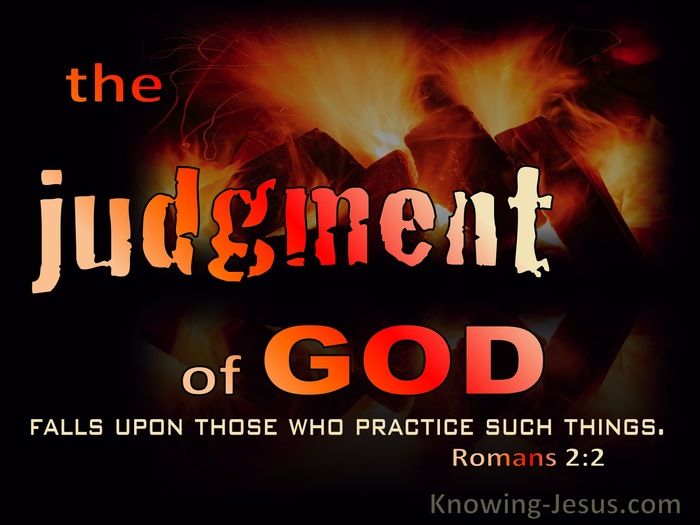
Romans chapter 2 is one of those passages of Scripture that reaches into the depths of our hearts and holds up a mirror we would often rather avoid. In chapter 1, Paul exposed the sins of the Gentile world—idolatry, corruption, and rebellion against God. Many who read that portion might nod in agreement, thinking, Yes, the world is wicked, and they deserve judgment.
But then chapter 2 arrives, and Paul shifts his focus. Suddenly the accusing finger is turned around:
“You, therefore, have no excuse, you who pass judgment on someone else, for at whatever point you judge another, you are condemning yourself, because you who pass judgment do the same things.” (Romans 2:1)
This is a sobering reminder: it is not only the outwardly immoral who stand guilty before God, but also the religious, the “moral,” and the seemingly upright. The hidden judge within us—the tendency to condemn others while excusing ourselves—is itself a sin.
The Danger of a Double Standard
Paul makes it clear that God’s judgment is impartial. Whether Jew or Gentile, religious or irreligious, God “will repay each person according to what they have done” (Romans 2:6). This truth should humble us. How often do we hold others to a standard we fail to meet ourselves? We criticize dishonesty, yet excuse our “small” lies. We shake our heads at greed, yet harbor discontent and materialism. We condemn anger in others, yet justify our own outbursts.
God sees through the double standard. He searches the heart, and no mask of morality can hide our true condition.
God’s Kindness Leads Us to Repentance
Yet in the middle of these warnings, Paul points us to the heart of God:
“Do you show contempt for the riches of his kindness, forbearance and patience, not realizing that God’s kindness is intended to lead you to repentance?” (Romans 2:4)
This verse shifts the tone. God is not eager to crush us under judgment; rather, He is patient, giving us time to repent. Every day we live is an opportunity—a chance to turn from pride and hypocrisy toward humble faith in Christ. His kindness is not permission to continue in sin but an invitation to come home.
Outward vs. Inward Transformation
Toward the end of the chapter, Paul highlights an important truth: real faith is not about outward appearances but inward reality. Circumcision, the great religious marker for the Jews, means nothing without obedience from the heart. In the same way, our outward religiosity—church attendance, Bible knowledge, spiritual language—means nothing if our hearts remain unchanged.
Paul concludes with this piercing statement:
“A person is a Jew who is one inwardly; and circumcision is circumcision of the heart, by the Spirit, not by the written code. Such a person’s praise is not from other people, but from God.” (Romans 2:29)
In other words, true faith is not about looking righteous before others—it is about being transformed by God’s Spirit from the inside out.
A Word for Us Today
In our culture, it is easy to fall into the trap of comparison. We point out the sins of society, the failures of leaders, or even the flaws in our fellow believers, all while ignoring the pride, envy, or bitterness that lurks in our own hearts. Romans 2 reminds us that judgment belongs to God alone. Our role is not to sit in His seat but to sit at His feet, confessing our sins and receiving His mercy.
This chapter calls us to humility, repentance, and authenticity. God is not fooled by outward appearances. He desires truth in the inward parts (Psalm 51:6). His kindness invites us to repentance, and His Spirit works to transform us from the inside out.
May we be a people less eager to judge and more eager to be judged by God’s Word. May our lives not be marked by empty religiosity but by a sincere heart that longs for His praise, not the approval of others.
-
A Call to Reflection and Renewal
The Book of Romans is one of the most profound and theologically rich texts in the New Testament. Written by the Apostle Paul, this epistle is a powerful exploration of salvation, faith, and the righteousness of God. In Romans Chapter 1, Paul opens the letter with an insightful yet challenging reflection on humanity’s relationship with God, the nature of sin, and the consequences of turning away from the divine.
Let’s dive into the spiritual depths of this chapter, not just as an ancient text, but as a living, breathing message for our hearts today.
1. The Revelation of God’s Righteousness (Romans 1:16-17)
Paul begins this letter by declaring that he is “not ashamed of the gospel,” for it is the power of God that brings salvation to everyone who believes (Romans 1:16). The gospel, for Paul, is not just a set of teachings; it is the very power of God to redeem, heal, and restore humanity.
But it is in the next verse where the key to understanding Romans 1 is laid out: “For in the gospel the righteousness of God is revealed—a righteousness that is by faith from first to last” (Romans 1:17, NIV).
This is a pivotal moment in understanding not only this chapter, but the entire epistle. Paul teaches that the righteousness of God is something that can only be received through faith. It’s not about works, laws, or human effort, but about trusting in God’s mercy and grace. The righteousness Paul speaks of is both a gift and a transformative power that reorients us toward divine truth and justice.
2. Humanity’s Rejection of God (Romans 1:18-23)
Following this, Paul starkly confronts the reality of human rebellion. He speaks of God’s wrath being revealed against all forms of ungodliness and wickedness. This is where the tone of the chapter shifts: Paul highlights how people, despite knowing God’s existence through creation, suppress the truth and refuse to honor Him.
Paul paints a picture of a humanity that, although aware of God’s eternal power and divine nature (Romans 1:20), chooses to worship idols, creating gods in their own image. This rejection of God’s truth leads to spiritual decay and the darkening of hearts (Romans 1:21).
The crux of the matter here is not the absence of knowledge but the deliberate rejection of it. Paul’s point is that creation itself—our world, the stars, the seasons, the complexity of life—testifies to the Creator. Yet humanity has chosen to ignore this testimony in favor of lesser, fleeting idols.
3. The Consequences of Idolatry (Romans 1:24-32)
Paul explains that when humanity turns away from God, they inevitably spiral into sin. God “gave them over” to their desires (Romans 1:24, 26, 28)—a chilling phrase that suggests divine judgment in the form of allowing people to follow their destructive inclinations.
The behaviors Paul lists are not just a catalog of “sins,” but a deeper spiritual illness. They reflect a disordered love—a love that turns away from God and towards selfishness, lust, greed, envy, and all kinds of immorality. The passage is sobering because it shows that sin is not just about breaking laws; it’s about the fragmentation of our very nature and purpose.
Idolatry leads to broken relationships with God, with others, and with ourselves. It creates a false sense of fulfillment and purpose, leaving us empty and disconnected. Yet, Paul doesn’t offer condemnation without hope. The mere fact that we have this passage, that we are being called to reflect on these realities, is a sign of God’s mercy. It’s an invitation to turn back to Him before it is too late.
4. The Call to Repentance and Restoration
Romans 1 is heavy with the weight of human sin, but it is important to remember that the ultimate purpose of Paul’s letter is to point us toward the hope and restoration found in the gospel of Jesus Christ. Paul’s diagnosis of humanity’s brokenness isn’t a final word; it’s the beginning of a message of redemption.
God’s wrath, as described in this chapter, isn’t an arbitrary punishment; it is the consequence of humanity’s refusal to turn to the Source of life and love. Yet, Paul, throughout the rest of the letter, continues to unfold the glorious truth that through Jesus’ sacrifice on the cross, we can be reconciled with God. The gospel—the good news—offers forgiveness, transformation, and a new identity in Christ.
5. A Personal Reflection
As we meditate on Romans Chapter 1, it’s an invitation for us to examine our own lives. Do we, too, find ourselves turning away from the Creator in favor of lesser things? Are we seeking fulfillment in things that can never satisfy?
This chapter, though it speaks harshly about the consequences of idolatry and sin, ultimately beckons us toward a life of true worship. The kind of worship that acknowledges God’s sovereignty, His righteousness, and His grace. It calls us to repent where we have strayed and turn back to the one who can restore our souls.
6. A Prayer for Renewal
Lord, we come before You, acknowledging the ways we have turned from You. We confess that at times, we have chosen the temporary over the eternal, the created over the Creator. We ask for Your forgiveness and for the strength to turn back to You.
Help us to see Your righteousness not as a distant ideal, but as the power that can transform our lives. May we trust in Your mercy and grace, and allow You to restore us to the fullness of life You intended. In Jesus’ name, Amen.
Romans Chapter 1 reminds us of the deep realities of sin, the darkness that results from rejecting God, and the importance of turning back to Him in repentance. But even in the midst of this challenging message, there is hope—a hope that leads us into the loving arms of a God who is always ready to forgive and heal.
-
Finishing Faithfully – Acts 24-28
This week, I have chosen to take a different approach for this blog. Typically, I have written a reflection on one chapter of the Book of Acts each week, slowly tracing the development of the early Church and the incredible ministry of the Apostle Paul. However, since it has been a while since my last post, I felt it would be fitting to bring this series to a close by covering the final five chapters—Acts 24 through 28—together.
These chapters not only conclude the narrative of Acts but also encapsulate some of its most enduring themes: the perseverance of faith under pressure, the sovereign guidance of God, and the unwavering mission to proclaim the gospel of Jesus Christ, even in the most difficult circumstances. As we walk through these final chapters, we see Paul embodying the very spirit of what it means to be a faithful servant of Christ—undaunted by trials, bold in testimony, and anchored by an unshakable hope in the promises of God.
Acts 24: Faithfulness Amidst Injustice
In Acts 24, Paul finds himself standing trial before Felix, the Roman governor of Judea. The accusations brought against him by the Jewish high priest and elders are based on misrepresentations and outright falsehoods. Yet, Paul responds not with outrage, but with clarity, poise, and a firm commitment to truth. He gives a calm and reasoned defense, emphasizing that he has lived with a clear conscience before both God and man.
Felix, although intrigued by Paul’s message—particularly when Paul speaks about righteousness, self-control, and the judgment to come—ultimately delays making a decision. He leaves Paul in prison for two years, hoping perhaps for a bribe. In this we see the stark contrast between a man of conviction (Paul) and a man of compromise (Felix).
This chapter offers a sobering reminder that righteousness does not always lead to immediate reward, and justice in this world can often be slow or incomplete. However, Paul’s example teaches us that faithfulness to God is not contingent upon favorable circumstances. Even when forgotten by man, Paul remained confident that he had not been forgotten by God.
Acts 25–26: A Courageous Testimony
Chapters 25 and 26 recount Paul’s continued legal journey as he is brought before a new governor, Festus, and eventually before King Agrippa. Once again, the charges against him are unfounded. Yet rather than simply seeking to clear his name, Paul seizes the moment to share his testimony and preach the gospel.
In Acts 26, Paul’s speech before Agrippa is one of the most powerful and detailed accounts of his conversion and calling. He recounts how he once persecuted Christians with great zeal until an encounter with the risen Christ on the road to Damascus completely transformed his life. From that moment on, Paul was given a new mission—to open eyes, turn people from darkness to light, and proclaim the forgiveness of sins through Jesus.
What’s striking is Paul’s boldness and passion. He does not plead for mercy or attempt to curry favor with the king. Instead, he speaks with such conviction that Agrippa himself says, “Do you think that in such a short time you can persuade me to be a Christian?” (Acts 26:28). Paul responds, “Short time or long—I pray to God that not only you but all who are listening to me today may become what I am, except for these chains.”
Here we are reminded of the power of a personal testimony. Paul’s defense was not just legal; it was deeply spiritual. He saw every opportunity—even a trial before a king—as a platform for the gospel. May we learn from Paul to be ready to give an account of our hope, regardless of the audience or setting.
Acts 27: Trusting God in the Storm
Acts 27 takes us on a dramatic journey across the sea, as Paul is transported by ship toward Rome under Roman guard. The voyage is difficult from the beginning, and despite Paul’s warning, the ship continues into dangerous waters. Eventually, a violent storm overtakes the vessel, putting everyone on board in peril.
What is remarkable is Paul’s composure. While experienced sailors lose hope, Paul stands as a voice of calm and assurance. He shares a message from an angel who appeared to him, affirming that while the ship would be lost, no lives would be. Paul declares with confidence, “I have faith in God that it will happen just as he told me” (Acts 27:25).
This chapter powerfully illustrates God’s sovereignty, even over nature and chaos. Though Paul was a prisoner, he became the de facto leader during the crisis, guiding others with wisdom, compassion, and unshakable trust in God. The storm did not shake his faith—it revealed it.
We all face storms in life, both literal and metaphorical. Sometimes, like Paul, we find ourselves in the middle of something we didn’t cause and can’t control. Yet even there, God is present, speaking, leading, and preserving. Paul’s experience encourages us to trust in God’s promises, especially when the outcome seems uncertain.
Acts 28: The Mission Continues
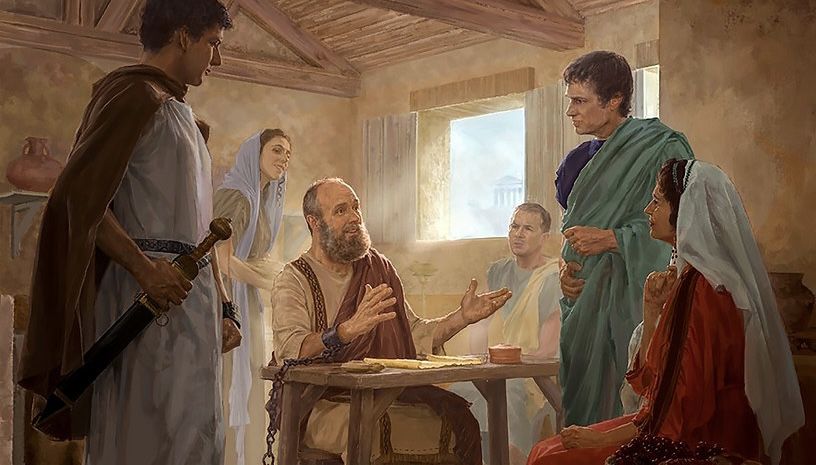
Paul’s arrival in Rome in Acts 28 marks both the end of his journey and the beginning of a new chapter in his ministry. Though still under house arrest, Paul does not consider his mission on hold. Instead, he welcomes visitors, teaches, and boldly proclaims the kingdom of God. His circumstances are limited, but his ministry is not.
The book ends with a remarkable statement:
“He proclaimed the kingdom of God and taught about the Lord Jesus Christ—with all boldness and without hindrance” (Acts 28:31).
It is a fitting conclusion to a book that began with Jesus commissioning His followers to be witnesses “to the ends of the earth” (Acts 1:8). Though the narrative pauses here, the mission continues. The gospel has reached Rome—the heart of the empire—and from there it will spread even further.
Acts ends not with resolution, but with anticipation. Paul’s story reminds us that God’s purposes are never thwarted, and His word is never bound. Even in chains, Paul was free to fulfill his calling.
Final Reflections: Finishing Well
These final chapters of Acts remind us of what it means to finish faithfully. Paul’s courage in trials, clarity in witness, and confidence in God’s promises are a powerful example for all believers. He did not give up, even when falsely accused, unfairly imprisoned, shipwrecked, or restricted. He remained steadfast, always seeking to glorify Christ.
As we reflect on the conclusion of Acts, we are challenged to ask: How will we finish? Will we remain faithful in hardship? Will we use every opportunity—no matter how inconvenient—to speak of Christ? Will we trust in God’s providence, even when the path is uncertain?
Let us, like Paul, press on with boldness and endurance. The story of Acts may close in chapter 28, but the mission it describes continues in us. May we be faithful to our calling, wherever it leads, and may the gospel go forward through our lives—”without hindrance.”
 Way & Soul