
“Love the Lord your God with all your heart and with all your soul and with all your mind.”
Matthew 22:37
-
Having Freedom as God’s Child
On the way back from church camp, I saw a song pop up on my phone and decided to listen to it, and though it wasn’t written with Jubilee in mind, it ended up capturing the heart of this year’s camp theme in a way that surprised me. Jubilee is about freedom—God’s promise to restore, redeem, and release us from bondage—but as I listened, I realized that true freedom doesn’t come without struggle. The song spoke to the brokenness of the world, the weight of suffering, and the deep ache for justice, peace, and the presence of God in dark places. And that’s exactly what Jubilee is meant to address: not just a time of celebration, but a radical overturning of oppression and despair. Sometimes, before we can live free, we have to come face to face with the things that hold us captive—fear, pain, disappointment, sin—and allow God to break those chains, even when it hurts. Freedom in Christ isn’t always instant or easy; it often comes through a journey of trusting God in the dark, choosing hope when everything feels hopeless, and surrendering when we don’t understand. The song reminded me that while we wait for full restoration, we can still stand firm in our identity as children of God, even when it feels like the world is falling apart. Jubilee isn’t the absence of pain—it’s the promise that our pain isn’t the end, and that God is still in the process of making all things new.
-
Live Like You Have Been Set Free
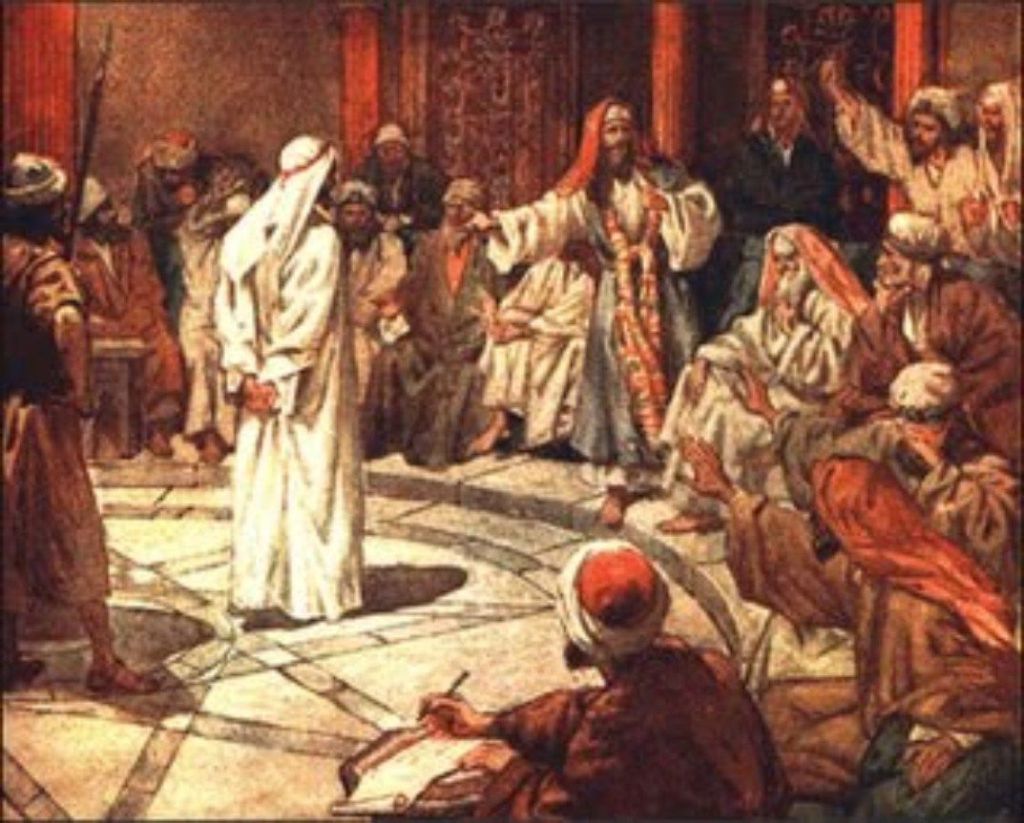
In Acts 23, we find Paul standing trial—falsely accused, misunderstood, and under pressure from every side. But he is unmoved. Because the man standing there is not the man he used to be.
He is a man who’s experienced his own Jubilee. He has been set free—spiritually, emotionally, eternally. And the power of that freedom sustains him even in the face of opposition.
So tonight, I want to talk about how we, too, can live like we’ve been set free, just like the apostle Paul did.
Let’s not just see Jubilee as a distant Old Testament tradition. Let’s not treat it as a camp theme that we forget once we come home. Let’s look at Paul’s life and discover what it really means to walk in the liberty of Jesus.
1. Freedom in the Midst of Trials
So as we begin, the first point I want to talk about here this evening is about “Embracing Freedom in the Midst of Trials.” If you have your bibles we are going to start reading in Acts 23 verse 1, which says:
“Paul looked straight at the Sanhedrin and said, ‘My brothers, I have fulfilled my duty to God in all good conscience to this day.’”
Lets pause here for a second:
Think about where Paul is: He’s in a courtroom, surrounded by religious leaders who want him dead. He has been beaten, rejected, and now stands on trial again for simply preaching the gospel.
And yet—he looks them in the eye and speaks with boldness. Why?
Because Paul is a free man, even while he’s in chains.
This is the paradox of the Christian life. Outwardly, Paul is a prisoner. But inwardly, he is free. He has peace. He has purpose. He has the presence of Christ.
That’s real freedom.
Freedom doesn’t mean the absence of problems. It means the presence of God in the middle of the problem. It means we can stand firm in our identity, even when the world questions us. We can have peace, even when things are uncertain. We can walk in confidence, even when we are surrounded by chaos.
Paul is able to say, “I have fulfilled my duty to God in good conscience,” because he knows who he belongs to. He knows what he’s been called to. And he knows he is no longer the man he once was.
So let me ask you: What would it look like for you to live with that kind of confidence this week? What would it look like to trust God even when you’re tired, overwhelmed, or unsure?
2. The Freedom of a Forgiven Life
Now lets move on to the second point I want to talk about here this evening which is “The Freedom of Living a Forgiven Life.”
The Year of Jubilee was, above all, a year of forgiveness.
Debts were canceled. Relationships were restored. Slaves were freed. It was a reminder that grace was real and that second chances were possible.
Paul knew that kind of forgiveness on a deeply personal level.
If you were to look back in Acts chapter 7, Paul—then called Saul—was standing by approving the stoning of Stephen, the first Christian martyr. He was the enemy of the church, the embodiment of judgment.
But by Acts chapter 9, everything changed. Paul met Jesus. And in that moment, the very core of who he was unraveled and was rebuilt by grace.
He went from persecutor to pastor. From enemy to evangelist. From self-righteous to surrendered.
Paul wrote in Romans 8:1:
“There is now no condemnation for those who are in Christ Jesus.”
He didn’t just preach that—he lived it.
Some of you tonight may be carrying guilt. Maybe from something you said, something you did, or something you failed to do. Maybe the enemy keeps reminding you of who you used to be.
But its important to realize that in Christ, you are no longer condemned. You are forgiven. And that forgiveness doesn’t just wipe away your past—it launches you into your future.
Paul’s life is proof that God doesn’t just redeem stories—He rewrites them. So if there are any of you here tonight who are facing guilt and shame, just reflect on this, especially if you going to camp this week, and I promise you by the end of the week you will no longer feel any if the guilt and shame you were once feeling. Instead you will feel transformed and renewed, in a life that is freeing and forgiving in christ.
3. God’s Sovereignty is the Foundation of Freedom
Now lets move on to the second point I want to talk about here this evening which is “The Foundation of Our Freedom is God’s Sovriegnty.”
If you still have your Bibles with you, let us look at one of the most powerful moments in Acts 23—verse 11, which says:
“The following night the Lord stood near Paul and said, ‘Take courage! As you have testified about me in Jerusalem, so you must also testify in Rome.’”
Lets pause again for one moment. Imagine how Paul must have felt at this time. The trial was intense. The accusations were piling up. And then—God shows up.
Not with an earthquake. Not with a miracle escape. But with a whisper: “Take courage.”
And that changes everything.
Because God wasn’t just reminding Paul of his mission—He was reminding Paul that He was still in control.
In Jubilee, the people returned to their inheritance. In Acts 23, God returns Paul to his calling. He restores his courage. He reminds him of the journey still ahead.
You may feel stuck right now. You may feel like you’re going nowhere. But God’s plan for you is not finished. And His presence is not distant. He is near. He is speaking.
And when you know that God is in control, you can live in freedom—even when nothing looks certain.
4. Living Jubilee Today
Finally, this brings me to final point for this evening, which is “Living in Jubilee Today”
Some of you here tonight may be asking yourself “What does it look like to live of life of Jubilee?”
Here are three steps we can take to do it.
# 1 is to Live Forgiven. Stop carrying shame. Stop trying to earn what Jesus already paid for. Accept the grace of God, and let that grace define you more than your failures ever could.
# 2 is to live a life that is Freeing to Others. Forgiven people forgive. Loved people love. People who’ve been shown mercy become people who give mercy. At camp, and in life, look for ways to lift others up. Speak hope. Choose kindness. Be a reflection of the freedom you’ve been given.
# 3 is to Trust the Process. Jubilee reminds us that God is in control. That He restores what was lost. That He brings us back home. So trust Him. Even when you can’t see the whole picture—He’s working.
So in Conclusion: Live Like You’ve Been Set Free
But before close this evening, I’ll leave you with the same question we started with:
What would it look like for you to live like you’ve been set free?
Would you worship more freely? Would you let go of fear? Would you forgive someone who hurt you? Would you stop hiding behind shame? Would you step into your calling like Paul did?
Because here’s the truth:
The same God who proclaimed liberty in Leviticus…
The same Savior who met Paul on the road to Damascus…
The same Spirit who stood beside Paul in the courtroom…
That same God is here. Tonight. With you.
Let this be the week you stop surviving and start living. The week you stop dragging your chains and start walking in grace. The week you stop fearing your future and start trusting God’s hand.
Let the chains fall. Let the fear go. Let grace flow.
And live—truly live—like you’ve been set free.
-
The Unlikely Path of Grace
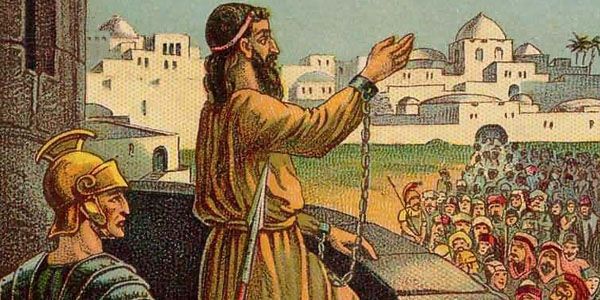
In Acts 22, we find a profound moment in the life of the apostle Paul. Before a violent and hostile crowd, he speaks not with weapons, nor with defense, but with the power of his testimony. It is here that we see one of the clearest reflections of God’s transformative work in a human life, and the quiet yet unshakable power of sharing one’s own story of divine intervention.
Paul’s defense before the crowd is not just a narrative of personal history; it is a witness to the grace of God at work. He recounts his former life as a zealous Pharisee, intent on persecuting the followers of Jesus. Paul, once named Saul, was blind in spirit, driven by a sense of duty but completely unaware of the depth of his error. Then, in a moment of divine interruption, the risen Christ confronted him on the road to Damascus. This moment became the pivot of Saul’s life—his eyes were opened, his heart softened, and his life was utterly redefined.
The beauty of this story is not just in the dramatic nature of Saul’s conversion, but in the way it speaks to the undeniable power of God to reach even the most unlikely hearts. Saul, once a murderer of Christians, became Paul, a servant of Christ and a messenger of His love and truth. This story is a testimony not only of God’s ability to save but of His ability to redeem even the deepest of pasts, to transform the most hardened of hearts.
Paul’s journey is a reflection of the unpredictability of God’s grace. Just as God called Saul out of the darkness and into the light, so too He calls each of us, though our paths may look different. God’s redemption doesn’t follow a linear or logical course—it is a grace that meets us in the most unexpected places, often in moments when we are least aware of our need for it.
What stands out most in Acts 22, however, is the humility with which Paul speaks. There is no boasting in his speech, no prideful attempt to show his own righteousness. Rather, he points to God’s faithfulness at every turn. He recounts his blindness, not as a mark of weakness, but as the very moment through which God opened his eyes to a deeper truth. He speaks of his calling with a sense of awe and gratitude, not self-glorification. For Paul, everything points back to the grace of God, which has carried him through even the darkest chapters of his life.
This reminds us that our stories matter. It is not the perfection of our lives that God is interested in, but the authenticity of our hearts and the willingness to share how His grace has changed us. We are all living testimonies of God’s redemptive power—whether our lives are filled with dramatic conversions, quiet seasons of growth, or slow but steady transformations. Every step we take in obedience is a testimony to His faithfulness.
As we look at Paul’s story in Acts 22, we are invited to consider our own. What have we been rescued from? What darkness has God pulled us from? How has His mercy made us new? Our personal testimonies carry the weight of His glory. God uses us, despite our imperfections, to speak of His grace. Paul’s testimony did not result in the salvation of everyone present, yet it planted a seed, stirring hearts and challenging minds. We may never know the full impact of our words, but we can trust that sharing our story is part of God’s larger story of redemption.
Paul’s words also remind us of the cost of discipleship. His testimony, though powerful, was not met with acceptance. In fact, it provoked hostility. The same crowd that had once cheered for him in his zeal for the law now turned against him for speaking of Jesus. This shows us that obedience to God is often met with resistance, but the call to testify remains. Just as Paul was faithful in his mission, we are called to be faithful in our own.
As we reflect on this passage, let’s remember that God has an unbreakable plan for each of our lives. His grace reaches beyond what we see, beyond our mistakes, beyond the judgments others may place on us. We are not defined by our past but by God’s calling and the work He is continually doing in us. Like Paul, we are chosen for something greater than ourselves. We are part of His story of reconciliation, redemption, and renewal.
Let this truth sink deep into your heart today: You are a living testimony. Your life—whether filled with the dramatic or the quiet—bears witness to the unfathomable grace of God, and that testimony has the power to change the world, one life at a time. Speak it with humility. Share it with love. And remember, just as Paul’s past didn’t disqualify him from God’s calling, neither does yours.
Closing Reflection:
God doesn’t ask us to be perfect or to have all the answers—He only asks us to speak truthfully of His work in our lives. Like Paul, we are not called to argue or debate, but to testify to the life-changing power of God’s grace. And that is enough.May we be faithful in sharing our own stories, trusting that God will use them in ways we may never fully understand, but will always bring Him glory.
-
Walking Willingly into God’s Will
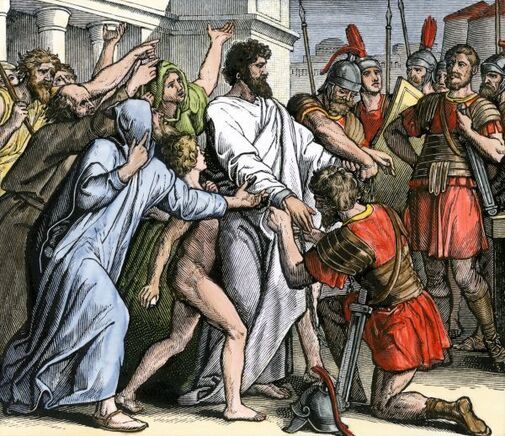
Acts 21 marks a significant turning point in the Apostle Paul’s journey—a moment not of triumph or miracles, but of surrender. And in that surrender, we encounter one of the most profound portrayals of what it means to walk willingly into the will of God, even when that path leads to suffering.
As the chapter begins, Paul is on his way to Jerusalem. He is not unaware of what awaits him. From the very beginning of this chapter, he is met with repeated warnings. The believers in Tyre “through the Spirit” urge him not to go. Later, in Caesarea, a prophet named Agabus dramatizes Paul’s future by binding his own hands and feet with Paul’s belt and declaring that the man who owns this belt will be bound and delivered over to the Gentiles.
Those around Paul are distraught. His friends—his spiritual family—plead with him not to continue. Their love for him is genuine. Their concern is real. They can’t bear to see him suffer. And yet Paul responds with these words:
“Why are you weeping and breaking my heart? I am ready not only to be bound, but also to die in Jerusalem for the name of the Lord Jesus.” (Acts 21:13)
This is not bravado. This is not recklessness. This is the voice of someone who has completely yielded his life to the will of God. Paul is not driven by a need for control, safety, or comfort. He is driven by obedience. He understands that God’s call on his life might lead him into hardship—but that calling is still worth everything.
What makes this moment so striking is how human it is. Paul doesn’t deny the pain of the situation. He doesn’t dismiss the love of his friends. In fact, he tells them plainly: “You are breaking my heart.” He feels the weight of their grief. Yet he walks forward—not out of coldness or detachment, but because he knows that love for God sometimes calls us to walk through the pain, not around it.
This passage invites deep reflection for us today. How often do we equate God’s will with ease, comfort, or favorable outcomes? How often do we assume that if something is hard, it must not be what God wants for us?
But the truth is this: obedience does not always lead to safe places. Sometimes it leads into storms, into rejection, into prisons. Sometimes it leads to a cross.
Yet in those places, we are not abandoned. We are accompanied. God does not send us into suffering without going before us. His Spirit sustains, comforts, and strengthens. The path may be difficult, but His presence remains constant.
Paul’s journey to Jerusalem, and ultimately to Rome, would not be easy. It would involve arrest, trial, hardship, and chains. But through those very chains, the gospel would be proclaimed to rulers and kings. Letters would be written from prison that would encourage and instruct the Church for centuries to come. What looked like loss became eternal gain in the hands of God.
This chapter teaches us that we must not measure the value of a path by how smooth it is, but by who has called us to walk it.
When we are faced with decisions, with trials, or with fearful futures, we can ask ourselves: Am I willing to go where God is leading, even if it costs me something? Am I willing to trust that His purpose is greater than my pain? Can I believe that even in the midst of suffering, He is working out something I cannot yet see?
Following Jesus means that we will sometimes be called to say yes when everything in us longs to say no. It means trusting that obedience is more important than understanding. It means believing, like Paul did, that our lives are not our own—that we have been bought with a price, and that our highest calling is to glorify God, even when the way is hard.
Paul’s words echo through the centuries with a quiet, powerful conviction: “I am ready.”
May we be able to say the same—not with fearlessness, but with faith. Not with certainty about the outcome, but with certainty about the One who leads us.
We may not all be called to face chains or death, but we are all called to lay down our lives—our plans, our comfort, our control—at the feet of Christ. That kind of surrender is costly. But it is also the way to true peace, and to a life that bears fruit beyond anything we can imagine.
Let us walk forward, like Paul, with hearts anchored not in the security of the path, but in the faithfulness of the God who walks beside us.
-
Israel, Iran, and the Bigger Picture We Might Be Missing

Lately, there’s been a lot of tension in the news between Iran and Israel. Some of it has escalated to airstrikes, drone attacks, nuclear threats—you name it. It seems like every other week there’s another headline about how close we are to another major war in the Middle East. And honestly, it’s hard not to feel overwhelmed, confused, or even just numb to it all.
But while all this was going on, I was reading through Romans 11, and it really gave me a different lens to look at the whole situation. I’m not saying Romans 11 is going to explain every part of modern geopolitics, but it does give us a glimpse into how God sees Israel, what His plan is, and how even global chaos can fit into a much bigger spiritual story.
God Hasn’t Given Up on Israel (Even If It Looks Like It)
Paul starts Romans 11 with a super direct question: “Has God rejected His people?” He’s talking about Israel, and the short answer is—no way. Paul, who’s writing the letter, is Jewish himself, and he uses his own story to prove that God hasn’t abandoned the Jewish people. Even though a lot of Jews in Paul’s time (and even now) didn’t believe Jesus was the Messiah, God has still kept a faithful “remnant”—a smaller group who do believe.
It’s easy to think that since Israel as a nation hasn’t embraced Jesus, God must’ve moved on to someone else. But Romans 11 pushes back hard on that idea. Paul’s basically saying, “Don’t get it twisted—God is still working with Israel, even if it doesn’t look like it right now.”
This hit me pretty hard, especially with everything happening in Israel today. The attacks from Iran, the fear of war, the whole mess with Gaza—if you’re just watching the news, it’s easy to feel like Israel is always on the verge of being wiped out. But Romans reminds us that God is still in control, and His promises to Israel haven’t expired.
What’s the Deal with the Olive Tree?
Paul uses this metaphor of an olive tree to explain how Jews and Gentiles fit into God’s plan. Basically:
- The natural branches are the Jewish people.
- Some were broken off because they didn’t believe.
- Wild branches (Gentiles—non-Jews) were grafted in because of their faith in Jesus.
- But the broken branches can be grafted back in if they come back to faith.
That might sound kind of weird at first, but it actually makes a lot of sense. Paul is saying that God’s people aren’t just one group anymore—it’s about faith, not just ethnicity. But he also warns Gentiles (people like me) not to get cocky. Just because we’re included now doesn’t mean we should act like we replaced Israel or look down on them.
In today’s terms, it’s like Paul is warning modern Christians: “Don’t think God’s done with the Jewish people just because you’re part of the Church now. You’re not the center of the story—Jesus is.”
So How Does Iran Fit Into This?
Okay, so what does any of this have to do with Iran and Israel?
A lot, actually.
Iran’s government sees Israel not just as a political enemy, but as a religious one. They talk openly about wanting to destroy the country, and they fund terrorist groups like Hamas and Hezbollah that are constantly fighting Israel from different directions. There’s also the whole issue of Iran trying to develop nuclear weapons, which makes everything way more dangerous.
From a political standpoint, this is about land, power, religion, oil—you name it. But from a biblical standpoint, it’s also spiritual.
Romans 11 talks about a “hardening” that’s come upon Israel. That means they’re spiritually kind of asleep right now—at least as a whole nation. But this hardening isn’t forever. Paul says that after “the fullness of the Gentiles” comes in (basically, once enough non-Jews come to faith), Israel’s eyes will be opened again, and “all Israel will be saved.”
So while Iran and other enemies try to wipe Israel off the map, God’s actually preparing them for something bigger: restoration. It might sound crazy, but Romans 11 suggests that all the stuff Israel is going through right now—the wars, the threats, the pain—might actually be part of the journey that leads them back to God.
What Are We Supposed to Do About It?
Let’s be real—we’re probably not going to solve Middle East peace from our dorm rooms or Starbucks study sessions. But Romans 11 shows that we still have a role to play, even if it’s not political.
Here are a few things that stood out to me:
1. Pray for Israel and the Middle East
Seriously. Not just for safety and peace (which is important), but for spiritual awakening. Paul says that Israel’s return to faith will be like “life from the dead.” That’s powerful.
2. Stay Humble
It’s easy to feel superior when you think you’re part of the “in” group. But Paul tells us not to boast about being grafted in. Everything we have—our salvation, our relationship with God—is a gift. If God is patient with Israel, we should be too.
3. Look Beyond the Headlines
When you hear about another airstrike or another round of violence, remember that there’s more going on than just what we see. God has been writing this story for thousands of years. It’s still unfolding.
4. Share the Gospel
Paul says that part of why Gentiles are included in the first place is to provoke Israel to jealousy—that they would see the relationship we have with God and want it for themselves. That means our lives should reflect something so real and hopeful that others want to know where it comes from.
Wrapping It Up: God’s Plan Is Bigger Than the News Cycle
Romans 11 isn’t just some deep theological chapter for Bible nerds. It’s a reminder that God is faithful, even when things look hopeless. It’s a challenge to stay humble and hopeful. And it’s a promise that what’s happening in the Middle East today is not the end of the story.
Israel’s future is not destruction—it’s redemption. And somehow, even in all the chaos, God is moving things toward that moment.
So yeah, the headlines are intense. The politics are complicated. But Romans 11 reminds us that God hasn’t lost control—and He definitely hasn’t lost track of His people.
-
A Faithful Servant’s Farewell
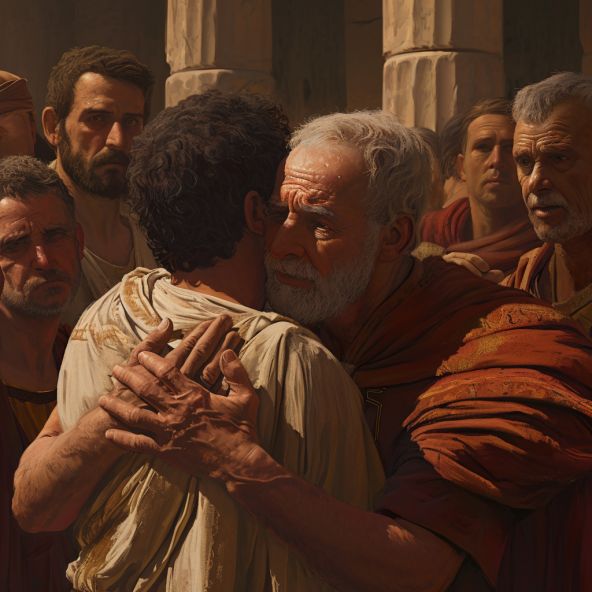
“That I might finish my course with joy, and the ministry…” (Acts 20:24)
Acts Chapter 20 stands as a solemn and sacred portion of Holy Scripture. It is filled with the pathos of parting, the strength of apostolic conviction, and the faithful labors of a servant of Jesus Christ whose life was wholly given to the Gospel. In this chapter, we find the Apostle Paul not only traveling across the lands to preach and confirm the saints, but also pouring out his soul in farewell to the elders of the church at Ephesus.
Let us consider the sacred truths this chapter presents and examine our own hearts in light of them.
1. Paul’s Unceasing Labor in the Gospel
“And after the uproar was ceased, Paul called unto him the disciples, and embraced them…” (v.1)
Though the tumult at Ephesus had just subsided (Acts 19), Paul did not grow weary nor idle. He continued his missionary journey, strengthening the churches, encouraging the brethren, and laboring in word and doctrine. Herein is a lesson to the faithful: the work of the Lord is not paused by the troubles of the world.
Let us not be discouraged by opposition, nor faint in tribulation. The faithful servant of God presses on—preaching, teaching, praying, and comforting, knowing that his labor is not in vain in the Lord (1 Cor. 15:58).
2. The Raising of Eutychus – The God of Mercy and Power
“And there sat in a window a certain young man named Eutychus… and was taken up dead.” (v.9)
In Troas, the Apostle preached late into the night. A young man, overcome with sleep, fell from the third loft and was taken up dead. But Paul, embracing him, said, “Trouble not yourselves; for his life is in him.” (v.10)
This miraculous raising is a token of God’s mercy, even in times of human weakness. It reminds us that the Lord is mighty to save and quick to restore. Even when our spiritual strength wanes, when we grow weary or distracted, the Lord is gracious to revive the fainting soul.
May we be stirred not to spiritual slumber, but to watchfulness, lest we fall. And if we have fallen, let us rise again through the mercy of our Redeemer.
3. Paul’s Farewell to the Ephesian Elders – A Shepherd’s Heart
“Ye know, from the first day that I came into Asia… I have been with you at all seasons…” (v.18)
In one of the most tender and solemn scenes in the New Testament, Paul gathers the elders of the church at Miletus and delivers a heartfelt address. He rehearses his manner of life among them: his humility, his tears, his trials, and his unceasing labors. He declares that he has “kept back nothing that was profitable,” but taught them publicly and from house to house (v.20).
He gives them solemn charge: “Take heed therefore unto yourselves, and to all the flock, over the which the Holy Ghost hath made you overseers…” (v.28)
This charge remains vital to all who lead, teach, or influence others in the faith. Pastors, parents, elders, and ministers must guard the flock with care and vigilance, for grievous wolves still enter in, not sparing the flock.
Let us also note Paul’s own testimony:
“But none of these things move me, neither count I my life dear unto myself, so that I might finish my course with joy…” (v.24)
O, what holy resolve! Here is the secret of steadfastness: Paul’s life was surrendered to Christ, and his only aim was to finish well. He did not seek ease or safety, but to be faithful unto death. May the Lord grant us such singleness of heart!
4. The Tears of Parting – Love in the Body of Christ
“And they all wept sore, and fell on Paul’s neck, and kissed him…” (v.37)
The chapter ends not with fanfare, but with tears. The saints at Ephesus wept, for they would see Paul’s face no more. They mourned the parting of one who had fed them the bread of life, who had loved them in truth, and who had warned them night and day with tears.
This scene reminds us that the bonds of Christian love are deep and sacred. Those who serve together, suffer together, and grow together in Christ form a holy fellowship—a communion of saints. When such ties are broken by time, distance, or death, there is sorrow. But it is a sorrow filled with hope, for we shall meet again at the feet of Jesus.
Conclusion: Let Us Be Found Faithful
Acts 20 challenges every believer to live a life of purpose, of sacrifice, and of faithfulness.
- Let us labor as Paul did—with humility and diligence.
- Let us cherish the Word of God and feed the flock faithfully.
- Let us warn and watch, guard and guide, not for our own gain, but for the glory of God.
- Let us weep with those who weep, and love the brethren sincerely.
- And may we each say, with holy courage:
“That I might finish my course with joy, and the ministry, which I have received of the Lord Jesus, to testify the gospel of the grace of God.” (Acts 20:24)
-
A Faith That Transforms

Acts 19 is a vivid testimony to the transforming power of the Gospel. As Paul arrives in Ephesus—a city known for its idolatry, spiritual darkness, and deep involvement in magic—we see what happens when the true light of Christ enters a place bound by falsehood.
A Baptism of Power and Truth
The chapter opens with Paul encountering a group of disciples who had received John’s baptism, but had not yet heard of the Holy Spirit. When Paul explains the full Gospel of Jesus Christ, they are baptized in His name, and the Holy Spirit comes upon them with power. This moment reminds us that belief is not the end—it’s the beginning. The fullness of life in Christ comes through the Spirit who indwells, empowers, and transforms us.
Miracles That Point to Jesus
As Paul teaches in the synagogue and then in the lecture hall of Tyrannus, God begins to perform extraordinary miracles through him—even cloths that touched Paul’s skin healed the sick and cast out demons (Acts 19:11–12). But notice: the miracles didn’t glorify Paul—they pointed to the living presence of Jesus. This shows us that when we live in surrender, God can do more than we imagine, not for our fame, but for His glory.
False Authority Exposed
One of the most sobering moments comes when some Jewish exorcists, including the sons of Sceva, attempt to use Jesus’ name like a magic spell: “In the name of Jesus, whom Paul preaches, I command you to come out.” The spirit replies chillingly: “Jesus I know, and Paul I know about, but who are you?” (Acts 19:15). The men are overpowered and flee wounded.
This account reveals a vital truth: spiritual authority isn’t borrowed—it’s borne out of relationship. You cannot fake intimacy with Christ. Knowing about Jesus is not the same as knowing Him. Demons recognize the difference.
A City Transformed by Repentance
The fear of God falls on the city, and many come confessing their sins. Those who practiced sorcery brought their scrolls and burned them publicly—a radical, costly act of repentance. The value of the scrolls was 50,000 drachmas (millions in modern currency), yet they chose to destroy them. Why? Because they had found something greater than power, wealth, or influence. They had found the truth.
This is what genuine revival looks like: not just emotion, but transformation. Not just attending church, but laying down idols. When Jesus becomes Lord, we are willing to part with anything that stands in His way.
Confronting the Idols of Our Time
Toward the end of the chapter, a riot erupts because the silversmiths fear the Gospel will destroy their business making idols of Artemis. The Gospel will confront anything that steals the worship that belongs to God. And often, it’s not just about ancient gods—it’s about modern ones: fame, control, comfort, success. Like in Ephesus, Jesus doesn’t come to be added to our shelf of idols. He comes to replace them.
A Final Thought
Acts 19 challenges us deeply:
- Is our faith merely cultural, or is it spiritual and alive?
- Have we truly repented of the idols in our hearts?
- Do we walk in the kind of authority that comes from intimacy with Jesus?
- Are we bold enough to let the Gospel disrupt our city, our circles, our comfort zones?
May we be people who carry the power of the Holy Spirit, speak truth with love, and live with the kind of faith that causes the forces of darkness to tremble—not because of who we are, but because of Whose we are.
“So the word of the Lord grew mightily and prevailed.” (Acts 19:20)
May it be so in our lives, our churches, and our generation.
-
The Spiritual Journey of David

The story of David, son of Jesse, is one of the most profound spiritual journeys recorded in Scripture. His life is a tapestry woven with triumphs, trials, failures, repentance, and unwavering devotion to God. From his humble beginnings as a shepherd boy to his rise as Israel’s greatest king, David’s story invites us to reflect on the nature of divine calling, human weakness, and the relentless grace of God.
1. Chosen by the Heart, Not by Appearance
When the prophet Samuel went to anoint the next king of Israel, he expected someone tall and regal, like Saul. But God reminded him: “The Lord does not look at the things people look at. People look at the outward appearance, but the Lord looks at the heart” (1 Samuel 16:7). David, the youngest of eight sons, was overlooked by men—but chosen by God.
This moment teaches us that God sees potential in places the world overlooks. Your current obscurity does not cancel your divine purpose. Like David, you may be tending sheep today, but your anointing still stands.
2. Courage Rooted in Faith: Facing Goliath
When David faced Goliath, he wasn’t armed with a sword or shield, but with trust in the Lord. He declared, “You come against me with sword and spear, but I come against you in the name of the Lord Almighty” (1 Samuel 17:45).
David’s victory over Goliath was not just about bravery—it was about belief. When your confidence is grounded in God, no giant is too big. His story teaches us to face life’s battles with spiritual weapons: faith, prayer, and obedience.
3. Loyalty in Adversity: Serving Saul
After slaying Goliath, David gained fame, but also the jealousy of King Saul. Though Saul tried to kill him, David never retaliated. Twice he had the opportunity to take Saul’s life, but he said, “I will not lift my hand against my master, because he is the Lord’s anointed” (1 Samuel 24:10).
David’s restraint reveals the character of a true servant of God—one who honors God’s timing and authority, even in suffering. In a culture of instant gratification and revenge, David’s patience teaches us to wait on the Lord.
4. The Rise to the Throne: God’s Timing Prevails
After years of fleeing and waiting, David was crowned king—first over Judah, then over all Israel. He brought the Ark of the Covenant back to Jerusalem with dancing and worship, prioritizing the presence of God in his reign.
David understood that leadership without God’s presence is empty. His reverence for God’s holiness reminds us that success is not about position, but about proximity to the Divine.
5. The Fall: Sin, Repentance, and Redemption
David’s darkest moment came with his sin against Bathsheba and the murder of her husband, Uriah. He fell hard—but he did not hide. Confronted by the prophet Nathan, David didn’t excuse his sin. Instead, he cried out, “Create in me a pure heart, O God, and renew a steadfast spirit within me” (Psalm 51:10).
Here lies the heart of David: not sinless, but soft toward God. His life reminds us that no one is beyond redemption. True repentance opens the floodgates of mercy.
6. The Pain of Consequences and the Peace of Surrender
Though forgiven, David faced consequences—family betrayal, the death of his son, rebellion from within his own house. Through it all, he returned to God again and again. When his son Absalom rebelled, David fled Jerusalem, weeping. Yet even then, he said, “If the Lord is pleased with me, he will bring me back” (2 Samuel 15:25).
David surrendered to God’s will even when it hurt. Spiritual maturity isn’t measured by perfection but by persistence in trusting God through pain.
7. A Legacy of Worship and Hope
In his later years, David prepared materials for the temple, though God told him he wouldn’t build it—his son Solomon would. Still, David rejoiced, passing the baton with faith and hope.
His final words weren’t boasts of victories or monuments—but songs of worship and prophecy about the coming Messiah, the “Son of David.” It is no coincidence that Jesus, the Savior of the world, is called the Root and Offspring of David.
David’s Life Is a Mirror
David’s life shows us that spirituality is not about having an unblemished record—it’s about having a heart that returns to God again and again. He was a man of deep flaws and deeper faith. Warrior and poet. King and servant. Sinner and saint. He reminds us that God’s grace is greater than our failures and that the heart that seeks after Him will never be abandoned.
May we, like David, be people after God’s own heart.
-
Trusting god’s timing and presence

In the whirlwind of ministry, resistance, and relocation, Acts 18 offers us a beautiful and powerful picture of God’s faithfulness to His servants. This chapter is often overshadowed by more dramatic moments in Acts, but its quiet strength speaks volumes to anyone walking a path of purpose, especially when that path feels uphill.
Whether you’re a leader in ministry, a believer navigating a tough workplace, or simply someone trying to stay faithful in the ordinary, Acts 18 reminds us that God’s hand is steady—even when life is not.
1. Divine Encounters Begin with Ordinary Moments
The chapter begins with Paul arriving in Corinth, a city infamous for its moral decay and spiritual confusion. But it’s also a place where God is about to work mightily. Here, Paul meets Aquila and Priscilla, two Jewish tentmakers who had recently been expelled from Rome due to persecution under Emperor Claudius.
It’s easy to overlook this meeting as a passing detail—but this couple would go on to become key figures in the early church. Their hospitality and shared vocation created the foundation for a lasting ministry partnership. Sometimes, the most meaningful spiritual connections begin in the context of our daily lives. A job, a move, a conversation—all can be used by God to align our lives with His greater purpose.
Takeaway: God often sets up divine appointments in seemingly mundane circumstances. Are you watching for them?
2. Faithfulness Will Meet Resistance—but God Will Meet You There
As Paul begins preaching in the synagogue, he encounters increasing hostility. Instead of giving up, he boldly redirects his mission toward the Gentiles, saying,
“Your blood be on your own heads! I am innocent. From now on I will go to the Gentiles.” (Acts 18:6)
Even in rejection, Paul does not stop. He simply shifts focus under God’s direction. He continues ministering, and we learn that many come to faith—including Crispus, the synagogue leader, and his entire household.
Still, it’s clear Paul is facing weariness. Ministry in Corinth is not easy. He’s likely tired, perhaps even discouraged. That’s when God shows up in a vision, speaking directly to Paul’s heart:
“Do not be afraid; keep on speaking, do not be silent. For I am with you, and no one is going to attack and harm you, because I have many people in this city.” (Acts 18:9-10)
This moment is deeply personal. God doesn’t give Paul a strategy—He gives him His presence. It’s a reminder that the power to endure doesn’t come from results or even from people’s response—it comes from knowing God is with you.
Takeaway: When you feel unseen or exhausted, remember that God’s encouragement often comes just when you need it. He sees your labor—and He is near.
3. Perseverance Bears Fruit Beyond What You See
Encouraged by God’s words, Paul stays in Corinth for a year and a half—longer than most of his stops. The church is planted, disciples are made, and the seeds of spiritual transformation begin to grow in a city once known for its corruption.
Interestingly, even when local leaders attempt to attack Paul through legal accusations, the Roman proconsul, Gallio, refuses to take action. In an ironic twist, the political system that had been hostile in other cities becomes the very shield that protects Paul here. God is able to use even secular powers to fulfill His divine purposes.
We also see the fruit of mentorship toward the end of the chapter. Apollos, a gifted and passionate speaker, enters the scene. Though eloquent, his knowledge is incomplete. Priscilla and Aquila step in—not to criticize—but to gently teach him “the way of God more accurately.” (Acts 18:26)
Their humility and willingness to disciple Apollos becomes a powerful model of how spiritual maturity multiplies. Apollos goes on to become a significant leader in the early church, all because someone took the time to pour into him.
Takeaway: Faithfulness doesn’t always look dramatic, but it leaves a legacy. Your obedience today might bless people you’ll never even meet.
4. Lessons for Today: What Acts 18 Teaches Us About Our Walk
Whether you’re serving in full-time ministry or simply trying to honor God in your daily life, Acts 18 holds profound encouragement:
- God directs through detours. Aquila and Priscilla didn’t plan to meet Paul—but their relocation became part of a divine plan. Trust God, even in the unexpected.
- Faithful obedience matters more than perfect results. Paul kept preaching, even when people rejected him. Your role is to plant and water—God brings the growth.
- God speaks in the pressure. If you’re feeling overwhelmed, lean in. He has a word for you.
- Mentorship and community matter. Don’t walk this journey alone. And don’t withhold your wisdom—someone needs your voice.
- Your city matters to God. Corinth was broken, but God said, “I have many people in this city.” No place is too dark for the light of the gospel.
Final Encouragement: Keep Going. He Is With You.
Acts 18 is a testimony to the quiet but powerful ways God works through faithful people. You may not feel like you’re making a difference. You may not see the fruit of your obedience right away. But the same God who stood with Paul in Corinth stands with you now.
He says to you today:
“Do not be afraid. Keep on speaking. Keep on living. Keep on loving. I am with you.”
So take heart. Stay faithful. Your labor in the Lord is never in vain.
-
The Unknown God Made Known

In Acts 17, we find the apostle Paul in a city full of ideas, idols, and deep spiritual hunger. Athens was the intellectual capital of the ancient world—home to philosophers, thinkers, and religious seekers. Yet, despite their pursuit of knowledge, the people of Athens were missing something vital: a relationship with the living God.
Paul walks through their city and sees altars dedicated to every possible deity, and one in particular catches his attention—an altar inscribed “To an Unknown God.” This wasn’t just an expression of humility; it was an admission that even with all their searching, something was still missing. They were worshiping without truly knowing the One worthy of their worship.
Paul steps into the Areopagus—not to condemn, but to connect. He begins with respect, acknowledging their spiritual hunger: “Men of Athens, I see that in every way you are very religious.” Then he gently redirects their longing toward the truth. The “unknown God” they worshipped in ignorance was the very God who created the universe—the Lord of heaven and earth who does not live in temples built by human hands.
This chapter is powerful because it reflects something deeply human. Like the Athenians, we are all searching. Our culture may not be filled with marble idols, but we still build altars—to success, fame, knowledge, relationships, or even self. We long for meaning, for truth, for something greater than ourselves. And like them, we often sense there is something—Someone—we don’t fully know yet.
Paul tells them, and us, that God is not distant. He is not unknowable. In fact, “He is not far from each one of us. For in Him we live and move and have our being.” That truth is as relevant now as it was in ancient Athens. The Creator is not hiding from us; He is drawing near. Every breath, every heartbeat, every moment of longing is an invitation to seek Him.
Paul also reminds us that God has appointed a day when He will judge the world with justice through Jesus Christ—whom He raised from the dead. The resurrection is the proof that our faith is not just philosophy or wishful thinking—it’s rooted in history, in power, in the reality of a risen Savior.
What stands out in Acts 17 is not only Paul’s boldness but also his compassion. He speaks truth with love. He doesn’t water down the gospel, but he also doesn’t throw stones. He meets people where they are and introduces them to a God who has always been reaching out to them.
Today, we are surrounded by people who are spiritually hungry, who feel that something is missing, who may even worship “unknown gods” without realizing it. Let’s be like Paul—courageous in truth, gentle in approach, and confident that God is already at work in the hearts of those around us.
May we remember: the God who made the world sees us, knows us, and invites us to truly know Him.
 Way & Soul